Blown Head Gasket in Land Rovers: Symptoms, Causes, Repair Costs & Prevention
What is a Head Gasket?
Land Rovers have a well-deserved reputation for durability and reliability.
However, like all vehicles, they are susceptible to mechanical failure, and a blown head gasket is one of the most common problems that Land Rover owners face.
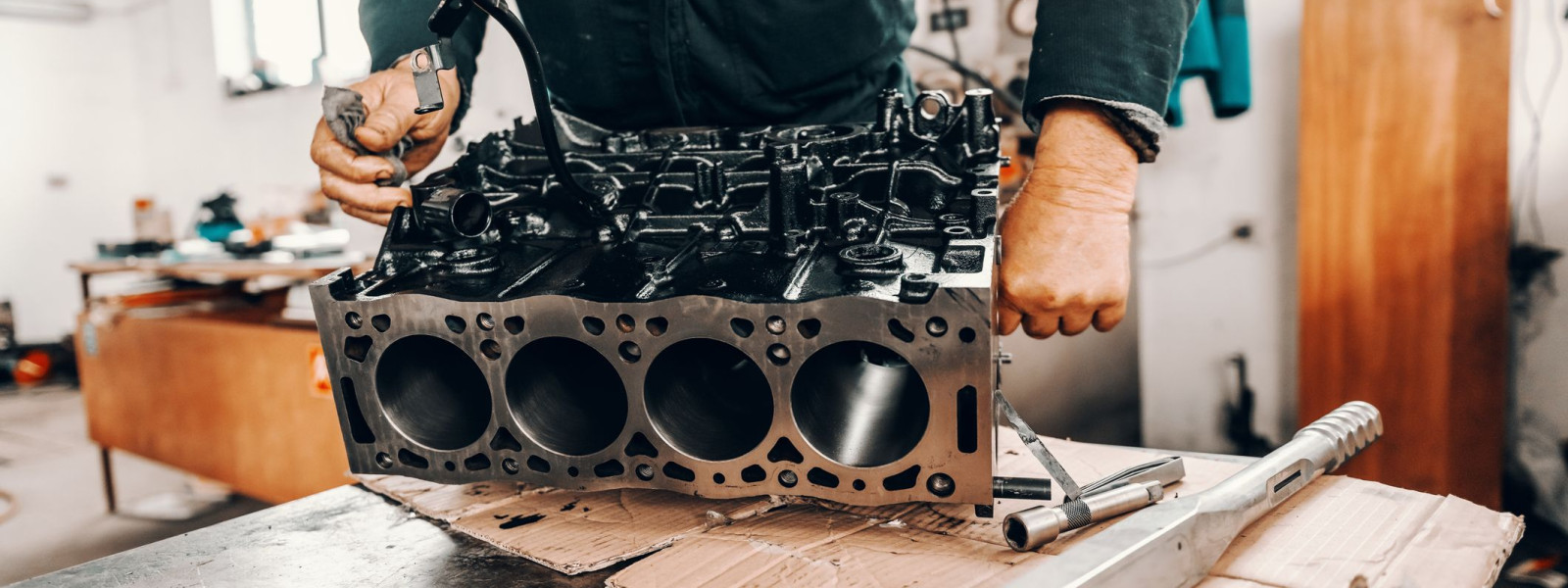
A head gasket is a crucial component of any internal combustion engine, and it plays a vital role in the engine's operation. The head gasket is located between the engine block and the cylinder head, sealing the combustion chamber so that the engine can function properly.
The head gasket must be made from durable materials that can withstand high temperatures and pressures, and it must also be designed to seal against oil and coolant leaks. Over time, the head gasket can become damaged or blown, which can cause serious engine problems that may lead to vintage car restoration.
For this reason, it is important for a qualified mechanic to inspect the head gasket regularly to ensure it is in good condition.
A blown head gasket is one of the most serious and costly mechanical failures a Land Rover owner can face. Unlike many other mechanical problems that develop gradually and allow for flexible scheduling, a head gasket failure demands immediate attention — continued driving after failure can cause irreversible engine damage within minutes.
Land Rovers have a well-deserved reputation for durability, but certain models and engine families are more vulnerable to head gasket failure than others. Understanding the warning signs, knowing what causes failures, and acting quickly when symptoms appear is the difference between a manageable repair and a complete engine replacement.
This guide covers everything Land Rover and Range Rover owners in Toronto need to know: what a head gasket does, why they fail, how to recognise the symptoms, which models are most at risk, how the repair is carried out, what it costs in Toronto, and how to prevent it from happening in the first place.
Key Takeaways
- A blown head gasket in a Land Rover is a serious issue that can lead to major engine damage if the vehicle is driven after symptoms appear.
- Common warning signs include white exhaust smoke, milky oil, overheating, coolant loss with no visible leak, bubbling in the coolant reservoir, and rough idle.
- Overheating is one of the most common causes of head gasket failure, often triggered by coolant leaks, thermostat issues, radiator problems, or water pump failure.
- Diagnosis should include more than one test, such as a combustion leak test, compression test, cooling system pressure test, oil analysis, and full diagnostic scan.
- Prevention depends on proper cooling system maintenance, correct coolant, regular inspections, and addressing any coolant loss immediately.
Table of Contents
- What Is a Head Gasket and What Does It Do?
- Symptoms of a Blown Head Gasket in a Land Rover
- What Causes a Head Gasket to Blow?
- Land Rover Models and Head Gasket Risk
- Diagnosing a Head Gasket Failure — How It Is Done
- The Head Gasket Repair Process
- Head Gasket Repair Costs in Toronto
- What Happens If You Continue Driving?
- How to Prevent Head Gasket Failure in Your Land Rover
- Frequently Asked Questions
1. What Is a Head Gasket and What Does It Do?
The head gasket is a precision-engineered seal located between the engine block (the lower, heavier casting that houses the cylinders and pistons) and the cylinder head (the upper casting that contains the valves, camshafts, and combustion chambers). It is one of the hardest-working components in any internal combustion engine.
Its role is to simultaneously seal three separate systems against each other:
- Combustion chambers — sealing the high-pressure, high-temperature gases produced during ignition so they cannot escape into the cooling or lubrication system
- Coolant passages — sealing the water jacket passages that circulate coolant between the block and head, preventing coolant from entering the combustion chamber or oil passages
- Oil passages — sealing oil galleries that supply lubricant to the camshafts and valve train components in the cylinder head
Modern Land Rover engines use multi-layer steel (MLS) head gaskets — thin layers of embossed steel with elastomer coatings that provide excellent sealing across the full range of operating temperatures. Older engines used composite gaskets with a steel core and softer facing material. Both types are susceptible to failure, but through different mechanisms.
The head gasket operates under extreme conditions: combustion pressures of 50-70 bar, temperatures exceeding 250 degrees Celsius, and the constant thermal cycling of engine warm-up and cool-down. Even a small warp in the cylinder head or a momentary overheating event can compromise the gasket's ability to maintain its seal across all three systems simultaneously.
2. Symptoms of a Blown Head Gasket in a Land Rover
Head gasket failure rarely happens all at once. In most cases, there is a progression of symptoms that begins subtly and escalates. Recognising the early warning signs allows you to stop driving before catastrophic damage occurs.
| Symptom | What Is Happening | Severity |
|---|---|---|
| White/grey exhaust smoke | Coolant burning in combustion chamber | HIGH |
| Sweet smell from exhaust | Coolant vapour escaping through exhaust | HIGH |
| Milky oil on dipstick/cap | Coolant mixing with engine oil — emulsification | HIGH |
| Persistent overheating | Combustion gases pressurising cooling system | HIGH |
| Bubbling in coolant reservoir | Combustion gas pushing into coolant tank | HIGH |
| Coolant loss with no visible leak | Coolant burning internally in cylinders | HIGH |
| Engine misfire / rough idle | Coolant in cylinder reducing compression | MEDIUM |
| Loss of power | Compression escaping past failed gasket | MEDIUM |
| Oil level rising | Coolant entering crankcase and mixing with oil | HIGH |
| Heater not producing warmth | Coolant level too low to circulate to heater core | MEDIUM |
The Milky Oil Cap Test One of the quickest and most reliable early checks for head gasket failure takes ten seconds. Remove the oil filler cap on top of the engine and look at its underside. A healthy engine will show dark oily deposits. A failing head gasket will show a white, cream, or mayonnaise-coloured emulsion — caused by coolant mixing with the oil in the rocker cover area. This is not a definitive test on its own, but it is a strong indicator warranting immediate further investigation. |
The Ontario Context: Why Overheating Is Especially Damaging
Toronto and southern Ontario's climate creates specific challenges for Land Rover cooling systems. Cold winter starts followed by extended warm-up periods stress the thermostat and coolant hoses. Stop-and-go highway traffic in summer, particularly the 401 corridor, causes sustained elevated coolant temperatures. Salt corrosion from winter road treatment accelerates hose clamp and fitting corrosion, increasing the risk of coolant leaks that can trigger rapid overheating.
A Land Rover that has spent its life in Ontario and has never had a coolant system service is statistically at higher risk of a head gasket event than the same vehicle maintained in a milder climate.
3. What Causes a Head Gasket to Blow?
| Cause | Explanation |
|---|---|
| Engine Overheating | Most common cause. Sustained high temperatures cause the aluminium head to warp, breaking the gasket seal. Often triggered by a failed thermostat, blocked radiator, failed water pump, or coolant leak elsewhere in the system. |
| Coolant System Neglect | Degraded or incorrect coolant loses its corrosion-inhibiting properties, leading to internal corrosion of cooling passages and accelerated gasket deterioration. |
| Incorrect Installation | If a gasket is replaced without resurfacing the cylinder head, the uneven mating surface will cause premature re-failure — sometimes within months. |
| Pre-ignition / Detonation | Engine knock from incorrect fuel grade, incorrect ignition timing, or carbon deposits on pistons creates pressure spikes that stress the head gasket beyond its design limits. |
| Age and High Mileage | All gaskets degrade over time. The composite and multi-layer steel gaskets used in Land Rover engines have a finite service life that reduces in vehicles driven hard or irregularly serviced. |
| Manufacturing Variation | Certain Land Rover engine families — particularly the 2.5-litre and 4.0/4.6 V8 engines — have a documented history of head gasket issues attributable to casting porosity and original gasket material choices. |
Critical Warning If your temperature gauge rises into the red or an overheating warning appears on the dashboard, pull over safely and switch off the engine immediately. Do not continue driving. Do not remove the radiator or coolant reservoir cap while the engine is hot — the system is pressurised and scalding coolant can cause serious burns. Allow the engine to cool completely before investigating. |
4. Land Rover Models and Head Gasket Risk
Not all Land Rover engines carry equal head gasket risk. The table below provides a reference guide for common models and their relative vulnerability.
| Model | Engine | Gasket Risk | Notes |
|---|---|---|---|
| Discovery Series II | 2.5 Td5 diesel / 4.0 V8 | High | Td5 known for head gasket issues related to coolant passage design; 4.0 V8 vulnerable when overheated |
| Range Rover Classic / P38 | 4.0 / 4.6 V8 | High | Notorious for head gasket failure; casting porosity and original gasket material both contribute |
| Freelander 1 | 1.8 K-series petrol | Very High | The Rover K-series is one of the most head-gasket-prone engines ever fitted to a production vehicle |
| Range Rover L322 | 4.4 V8 / 2.9 TD6 diesel | Medium | Aluminium block/head combination sensitive to overheating; TD6 diesel generally more robust |
| Discovery 3 / 4 | 2.7 / 3.0 TDV6 diesel | Low-Medium | Generally reliable but coolant hose failures can cause rapid overheating leading to gasket damage |
| Range Rover Sport L320 | 5.0 V8 / 3.0 TDV6 | Low-Medium | 5.0 supercharged runs hot; ensure cooling system is maintained; TDV6 very durable when serviced |
| Range Rover L405 / Sport L494 | 3.0 Td6 / Si6 | Low | Modern multi-layer steel gaskets; failures typically result from coolant system neglect or overheating events |
| Defender (2020+) | 2.0 P300 / D200 / D240 | Low | New platform; no widespread gasket issues reported; standard cooling system maintenance is sufficient |
The Rover K-series engine fitted to the Freelander 1 deserves a specific mention. This engine has a well-documented design vulnerability that causes rapid head gasket failure when the vehicle overheats even briefly. Many Freelander 1 owners experienced repeat failures. If you own one of these vehicles, a combustion leak test should be part of your annual service schedule.
The older 4.0 and 4.6 V8 engines in the Range Rover Classic and P38 are similarly prone due to casting porosity in the engine block that causes internal coolant seepage, even without a traditional gasket failure. These engines can consume coolant with no external leak and no obvious symptoms until the failure is well advanced.
5. Diagnosing a Head Gasket Failure — How It Is Done
A thorough head gasket diagnosis uses multiple tests, not just one. A single positive result should be corroborated with at least one additional test before a diagnosis is confirmed, because some tests can produce false positives.
| Test | What It Does | Notes |
|---|---|---|
| Visual coolant inspection | Check reservoir for brown/oily film; check oil filler cap for white mayonnaise-like deposit | First step; takes 2 minutes |
| Combustion leak test | Specialist tool draws coolant vapour through a chemical indicator that changes colour if combustion gases are present | Most reliable non-invasive test |
| Cylinder compression test | Measures compression in each cylinder; a failed cylinder will read significantly lower than others | Identifies which cylinder is affected |
| Cooling system pressure test | Pressurises the cooling system to check for internal leaks that do not appear externally | Reveals leaks into the engine block |
| Oil analysis | Lab test of engine oil sample identifies coolant contamination by glycol content | Definitive for confirming coolant/oil mixing |
| Block test (exhaust gas test) | Chemical fluid placed at radiator neck changes colour in presence of hydrocarbon exhaust gases | Fast, inexpensive, highly reliable |
| Full diagnostic scan | JLR-protocol scan checks for misfires, coolant temp sensor faults, and related stored codes | Essential for modern models |
At Westminster Motors, we perform a combination of the combustion leak test, compression test, and cooling system pressure test as standard in our head gasket diagnostic process. If all three point to the same conclusion, the diagnosis is considered confirmed and the repair process can be planned accurately.
6. The Head Gasket Repair Process
A head gasket replacement on a Land Rover is a major engine repair that requires precise execution. Cutting corners — particularly on cylinder head preparation — is the primary reason for premature re-failure after replacement.
Step 1: Engine Cooling and Draining
The engine must be completely cooled before disassembly begins. All coolant is drained and the intake system, exhaust manifolds, and ancillary components are removed to access the cylinder head bolts.
Step 2: Cylinder Head Removal
On inline-4 and inline-6 engines, one cylinder head is removed. On V6 and V8 engines — including the Td6, TDV6, Si6, and V8 configurations — both cylinder heads must be removed, which significantly increases labour time and cost.
Step 3: Cylinder Head Inspection and Machining
This is the most critical step that is most often skipped in substandard repairs. The cylinder head is sent to a machine shop where it is checked for warping using a precision straight-edge and feeler gauge. The acceptable tolerance is typically 0.05mm. Any head exceeding this must be surface-ground (resurfaced) to restore a perfectly flat mating surface.
If the head shows cracks — common when overheating was severe — it must either be welded and pressure-tested or replaced entirely. Reinstalling a cracked or warped head with a new gasket is a waste of money; re-failure is virtually guaranteed.
Step 4: Block Deck Inspection
The top surface of the engine block (the deck) must also be inspected for warping and damage. Block resurfacing is less common than head resurfacing but should not be overlooked.
Step 5: New Gasket and Hardware Installation
A quality OEM or OEM-equivalent head gasket set is used. Critically, the cylinder head bolts used on most Land Rover engines are torque-to-yield (TTY) bolts — they are designed to stretch during installation and must be replaced with new bolts, not reused. Reusing TTY bolts is a common shortcut that leads to re-failure.
The head is installed with a new gasket and new bolts, torqued in multiple stages to the manufacturer's specification, typically including both torque values and angle-of-turn specifications.
Step 6: Reassembly and Cooling System Refresh
All components are reassembled, the cooling system is refilled with fresh coolant of the correct specification, and the system is bled of air. The engine is started and brought to operating temperature while monitoring for leaks, correct temperature regulation, and absence of symptoms. A road test and final coolant top-up after the first heat cycle complete the process.
Step 7: Cooling System Root Cause Investigation
The repair is only complete if the underlying cause of the failure is also addressed. If the head gasket failed because of a faulty thermostat, a blocked radiator, or a failed water pump, those components must also be repaired or replaced. Fitting a new head gasket into an engine that will overheat again achieves nothing.
Westminster Motors Repair Standard Every head gasket repair at Westminster Motors includes cylinder head inspection and machining assessment, new OEM-specification TTY head bolts, a complete cooling system flush and refill with the correct Land Rover coolant specification, and a full diagnostic scan after repair to confirm all fault codes are cleared and the engine is performing correctly. |
7. Head Gasket Repair Costs in Toronto
Head gasket replacement is one of the most labour-intensive repairs on any modern engine. The cost in Toronto varies by engine type, whether the cylinder head requires machining or replacement, and whether related components are addressed at the same time.
| Service | Est. Cost (Toronto) | Notes |
|---|---|---|
| Pre-purchase / diagnostic inspection | $150 – $350 | Includes compression test, combustion leak test, and full scan |
| Head gasket replacement — 4-cylinder | $1,800 – $3,200 | Labour-intensive; includes head removal, machining, new gasket and hardware |
| Head gasket replacement — V6 diesel (Td6) | $2,500 – $4,500 | Double the work on a V-configuration engine; both banks must be inspected |
| Head gasket replacement — V8 | $3,500 – $6,000 | Both cylinder heads must be removed; cylinder head resurfacing almost always required |
| Cylinder head resurfacing | $200 – $500 per head | Machine shop cost; mandatory if head is warped; skipping this causes re-failure |
| Cylinder head replacement (new/reman) | $800 – $2,500 per head | Required if crack is detected or warping is beyond resurfacing tolerance |
| Cooling system flush and refill | $150 – $300 | Always performed at same time as head gasket work |
| Timing belt/chain inspection or replacement | $400 – $1,200 | Recommended at the same time since access is already gained during head work |
These estimates are based on independent specialist rates in Toronto. Franchised Land Rover dealer rates are typically 40-60% higher for the same work. The cost difference between an independent specialist and a dealer for a V8 head gasket job can exceed $2,000.
Should You Repair or Replace the Engine? On older, high-mileage vehicles — particularly the Range Rover P38 V8 and Discovery Series II — the cost of a full head gasket repair including machining can approach the vehicle's market value. In these cases, a remanufactured or low-mileage used engine replacement may be a more cost-effective solution. Westminster Motors can advise on the best approach for your specific vehicle and situation. |
8. What Happens If You Continue Driving?
The consequences of driving a Land Rover with a confirmed or suspected head gasket failure escalate rapidly with every kilometre driven. The progression is predictable:
- Stage 1 — Coolant loss: Small amounts of coolant are consumed into the combustion chamber and burned. The reservoir level drops gradually. The engine runs slightly hotter than normal.
- Stage 2 — Oil contamination: Coolant begins mixing with engine oil, forming an emulsion. The oil loses its lubricating properties. Bearings, camshafts, and cylinder walls begin accelerating wear.
- Stage 3 — Overheating: The compromised cooling system can no longer maintain engine temperature. Overheating events begin. Each overheating cycle warps the cylinder head further.
- Stage 4 — Engine damage: Piston rings, cylinder bores, and bearings suffer damage from contaminated oil and thermal stress. The repair scope expands from a head gasket to a full engine rebuild or replacement.
A head gasket repair diagnosed at Stage 1 might cost $2,500. The same vehicle diagnosed at Stage 4 may require a complete engine replacement costing $8,000-$15,000 or more. The window between early warning and serious damage is often just a few hundred kilometres.
9. How to Prevent Head Gasket Failure in Your Land Rover
Head gasket failure is not inevitable. For most Land Rover owners, it is a preventable event that results from deferred cooling system maintenance or ignoring early warning signs. The prevention measures below are straightforward and inexpensive relative to the cost of a failure.
| Prevention Action | Why It Matters |
|---|---|
| Coolant flush every 2 years | Maintains corrosion inhibitor effectiveness; prevents internal passage corrosion |
| Use correct coolant specification | Land Rover specifies OAT coolant; never mix types; never top up with plain water long-term |
| Thermostat replacement at 100,000 km | Thermostats fail gradually; a sluggish thermostat allows chronic mild overheating |
| Inspect coolant hoses annually | Rubber hoses crack with age; a sudden hose failure causes rapid total coolant loss |
| Water pump replacement at belt service | Water pumps wear bearings and impellers; replace whenever the timing belt is changed |
| Watch temperature gauge always | The gauge is the first warning; pull over immediately if it rises above normal |
| Address any coolant loss immediately | Never drive with low coolant; even a small ongoing leak will eventually cause overheating |
| Annual visual inspection of cap/oil | Checking the oil filler cap for white emulsion takes 10 seconds and can catch early failures |
Annual Cooling System Check — Highly Recommended for Toronto Owners Given Ontario's climate extremes, Westminster Motors recommends an annual cooling system inspection for all Land Rover and Range Rover models over five years old. This includes a coolant condition test (pH and freeze protection), hose pliability check, thermostat response evaluation, and a visual check for early oil/coolant mixing. The inspection takes approximately 30 minutes and can prevent thousands of dollars in damage. |
10. Frequently Asked Questions
Can I drive my Land Rover to the workshop if I suspect a head gasket problem?
It depends on the severity of symptoms. If you have minor coolant consumption with no overheating, a short, carefully monitored drive to a nearby workshop may be acceptable — watch the temperature gauge continuously. If you have white exhaust smoke, milky oil, or the temperature gauge is rising above normal, do not drive the vehicle. Have it trailered or use Westminster Motors' pick-up and drop-off service to avoid further damage.
How long does a head gasket replacement take?
For a four-cylinder engine, typically two to three days including machine shop time for cylinder head resurfacing. For a V6 engine, three to five days. For a V8, four to six days. Timing varies depending on machine shop availability and whether replacement parts such as a new cylinder head are required.
Will a head gasket sealer product fix my Land Rover?
Chemical sealers (like Bar's Leaks or K-Seal) can temporarily reduce small external coolant seeps in emergency situations, but they are not a repair for a genuine internal head gasket failure. They are ineffective for combustion gas leaks into the coolant, coolant leaking into the oil, or failures involving warped or cracked cylinder heads. Using a sealer in a Land Rover can also block coolant passages and damage the heater core. They should never be used as a substitute for proper repair.
My Land Rover passed its safety inspection — does that mean the head gasket is fine?
No. Safety inspections in Ontario test brakes, lights, steering, and structural components. They do not include engine compression tests, combustion leak tests, or coolant system analysis. A vehicle can pass a provincial safety inspection and have a failing head gasket simultaneously.
Is a head gasket repair covered under any warranty in Canada?
On a new vehicle within the manufacturer's warranty period, a head gasket failure would typically be covered unless caused by owner negligence (such as driving while overheating). On a used vehicle purchased from a dealer, the coverage depends on the warranty product sold with the vehicle. On a privately purchased used vehicle or one outside warranty, the repair is the owner's responsibility. Westminster Motors can advise on extended warranty claims and provide documentation for insurance or warranty purposes.
What is the difference between a Land Rover head gasket repair at a dealer vs. an independent specialist?
Both can perform the repair correctly when done by qualified technicians. The practical differences are cost (independent specialists charge 30-50% less for the same labour), wait time (independent specialists typically have shorter scheduling lead times), and the relationship. Westminster Motors focuses exclusively on Land Rover and Jaguar vehicles, meaning our technicians have specific experience with these engines that a generalist workshop cannot match.
Author: Avo Demirjian