How to Check Car Fluids Properly - A Step-by-Step Canadian Driver’s Guide
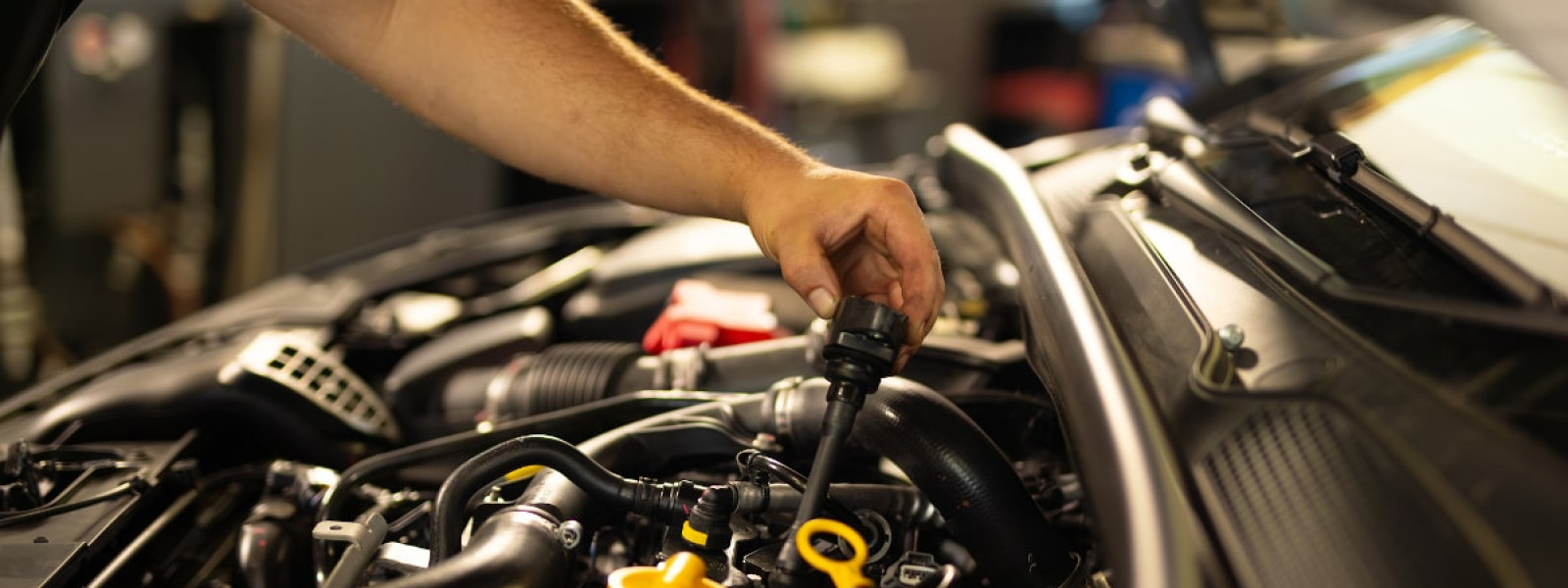
Every luxury vehicle is a testament to precision engineering — but even the most advanced Land Rover, Jaguar, or Bentley relies on something simple for flawless performance: the health of its fluids. Oil, coolant, brake fluid, and other hydraulic systems work quietly behind the scenes, protecting your engine, ensuring proper cooling, and delivering the refined driving experience these marques are celebrated for.
In Canada, where winter cold, summer heat, and humidity place extraordinary demands on a vehicle, keeping fluids in optimal condition isn’t just good practice — it’s essential for longevity, reliability, and safety.
At Westminster Motors Toronto, we service some of the most sophisticated vehicles on the road. Our technicians routinely see how minor fluid neglect can escalate into costly issues, especially in high-performance engines and electronically controlled systems common in Land Rover, Jaguar, and Bentley models.
This guide brings together our industry expertise to help you understand how to check your vehicle’s fluids properly, when to take corrective action, and when to trust the work to trained specialists. Whether you drive a Range Rover, a Jaguar F-Type, or a Bentley Continental GT, these steps will help you protect your investment and enjoy confident driving in every Canadian season.
Why Regular Fluid Checks Matter
Luxury vehicles are engineered to deliver precise, effortless performance. Their advanced engines, transmissions, and braking systems depend on meticulously maintained fluid levels to function at their best.
Each fluid has a crucial job:
- Engine oil reduces friction and protects intricate engine components.
- Coolant stabilizes engine temperatures during extreme Canadian weather.
- Brake fluid ensures crisp, reliable stopping response.
- Transmission fluid maintains smooth gear changes.
- Power steering fluid keeps handling balanced and refined.
- Washer fluid ensures visibility on salted, slushy winter roads.
When any of these fluids becomes low or compromised, performance suffers — sometimes subtly, sometimes dramatically. Overheating, hard shifting, brake fade, and premature component wear are all symptoms we regularly diagnose at Westminster Motors.
For high-end vehicles like Land Rover, Jaguar, and Bentley, the stakes are even higher:
these brands require manufacturer-specific, premium-grade fluids, and using the wrong formula can lead to internal damage or system malfunction.
Regular fluid checks are one of the simplest yet most impactful ways to maintain the integrity of your vehicle and prevent avoidable repair costs.
What You Need Before You Begin
To check your vehicle’s fluids accurately and safely, prepare a few essentials:
- A clean, light-coloured cloth or paper towel
- A flashlight for visibility
- Gloves
- Your vehicle’s owner’s manual (all three brands specify unique fluid requirements)
Ensure the following before starting:
- Vehicle parked on level ground
- Engine turned off (unless the manual specifies otherwise)
- Engine bay cool enough to touch
- Adequate lighting and space around the front of the vehicle
Many modern Jaguar and Land Rover models now feature electronic monitoring for certain fluids. Where applicable, we will note when professional inspection is recommended.
Step 1: Checking Engine Oil
The engines in Land Rover, Jaguar, and Bentley vehicles are finely tuned, high-performance units that depend on premium synthetic oils to deliver smooth acceleration and long-term durability. Checking oil regularly helps preserve engine health and prevent costly repairs.
1. Prepare the vehicle
A proper oil reading is taken when:
- The engine is off
- The vehicle is level
- The engine has rested for several minutes (unless the manufacturer specifies otherwise)
2. Locate the oil level indicator
Depending on your model, you may find:
- A traditional dipstick (common on Bentley)
- A digital oil level monitor accessed through the dashboard menu (common on newer Jaguar and Land Rover models)
If your model uses an electronic system, always follow the manufacturer’s instructions for an accurate reading.
3. Inspect the oil level
For dipstick-equipped vehicles:
- Remove the dipstick and wipe it clean.
- Reinsert fully.
- Remove again and check that the oil level sits between MIN and MAX markings.
A low oil level should not be ignored. On luxury engines, even a small deficit can increase wear.
4. Assess oil quality
Healthy oil will appear:
- Amber to light brown
- Smooth in consistency
- Free from burnt odours
If the oil appears dark, gritty, or smells burnt, it may be overdue for replacement or could indicate internal issues.
5. Always use the correct oil
Each of these marques requires very specific formulations:
- Land Rover & Jaguar: STJLR-approved synthetic oils
- Bentley: VW 504 00 / 507 00 specification full synthetics
Using anything else risks long-term damage. If you are unsure, allow Westminster Motors to handle the top-up or full oil service with manufacturer-approved products.
Step 2: Checking Coolant / Antifreeze
Coolant is vital to temperature control, corrosion protection, and engine efficiency — an especially critical consideration for Canadian drivers facing freezing winters and hot summers.
The cooling systems in Land Rover, Jaguar, and Bentley vehicles are designed around specific OAT/HOAT coolant formulations. Mixing the wrong type can compromise the system and lead to costly repairs.
1. Only inspect coolant with a cold engine
Opening a pressurized cooling system while hot can cause severe burns. Always allow the engine to cool completely.
2. Locate the coolant expansion reservoir
Typically a translucent tank with MIN/MAX markings. Use a flashlight if needed to see the fluid level clearly.
3. Verify the fluid level
It should rest between the indicated lines.
A low coolant level may suggest:
- A slow leak
- Water pump wear
- A failing expansion tank
- Head gasket concerns
4. Evaluate fluid condition
Healthy coolant appears:
- Clear in colour (pink, purple, or blue, depending on formulation)
- Free from debris
- Uniform in texture
Warning signs include:
- Rusty or brown colour → internal corrosion
- Oily sheen → possible head gasket failure
- Cloudiness or particles → contamination
5. About topping up coolant
If a small top-up is necessary, you must use the exact approved coolant for your marque:
- Jaguar & Land Rover: STJLR OAT formulations
- Bentley: G12++ / G13–type coolants
If the vehicle shows symptoms of contamination or repeated coolant loss, allow Westminster Motors to perform a full diagnostic inspection.
Step 3: Checking Brake Fluid
Brake fluid plays a vital role in ensuring sharp, dependable stopping power. In luxury vehicles equipped with advanced ABS, stability control, and electronic brake distribution, fluid quality has a direct impact on safety.
1. Locate the brake fluid reservoir
Usually positioned near the rear of the engine bay. The cap will be labeled DOT 4, which is the required specification for these marques.
2. Check the level
Brake fluid should always remain between the MIN/MAX indicators.
If below MIN, common causes include:
- Natural pad wear
- Small system leaks
- Moisture contamination
3. Check fluid clarity
Healthy fluid is:
- Clear to pale gold
- Free of debris
Unhealthy fluid is:
- Dark brown or black
- Cloudy or murky
- Thickened or contaminated
Since brake fluid is hygroscopic, it naturally absorbs moisture over time — which is especially relevant in the humidity and freeze–thaw cycles of Canadian weather.
4. Never mix brake fluids
Land Rover, Jaguar, and Bentley require DOT 4 or DOT 4 LV based on climate and model. Using the wrong formula can cause internal corrosion, ABS malfunction, or seal degradation.
5. When to seek professional service
You should schedule immediate inspection if you notice:
- A soft or spongy brake pedal
- A brake warning or ABS light
- Fluid below MIN
- Dark or contaminated fluid
Westminster Motors performs brake fluid flushes with OEM-approved fluids, ensuring proper viscosity and performance even in extreme Canadian temperatures.
Step 4: Checking Transmission, Power Steering, Washer, and Drivetrain Fluids
Luxury vehicles rely on a network of precision-engineered systems, each supported by its own specialized fluid. While some checks can be performed at home, others — particularly those involving sealed or electronically monitored units — are best left to professionals. In this section, we’ll outline what Canadian drivers can safely inspect themselves and when it’s time to trust Westminster Motors with the diagnostics.
A. Transmission Fluid (Automatic & Dual-Clutch Systems)
Transmission fluid is responsible for cooling, lubricating, and protecting one of the most sophisticated components in your vehicle. Smooth gear changes, proper torque delivery, and long-term system health all depend on it.
1. Know your vehicle’s system
Most modern Land Rover, Jaguar, and Bentley models use sealed transmissions, meaning there is no dipstick and no safe DIY way to check the level. These units require advanced diagnostic tools to monitor fluid condition and temperature.
If your model is equipped with a dipstick (older generation only):
2. Check the level (if applicable)
- Start the engine
- Warm the transmission to operating temperature
- Shift through all gears
- Leave in “Park”
- Check the dipstick for level and colour
3. Assess the fluid condition
Healthy transmission fluid is:
- Red or light amber
- Smooth and transparent
- Free from burnt odours
If the fluid appears dark, cloudy, or smells burnt, it’s time for a professional inspection. These symptoms may indicate overheating or internal wear.
4. A note on Canadian driving
Cold temperatures thicken transmission fluid, while extreme heat thins it — both of which can affect shifting quality. Regular inspections are essential for vehicles exposed to urban stop-and-go traffic or towing.
5. When to call Westminster Motors
If you experience:
- Delayed or harsh gear changes
- Transmission shudder
- Warning lights
- Fluid leaks under the vehicle
→ Book a diagnostic transmission service.
Luxury transmissions should never be serviced by guesswork.
B. Power Steering Fluid
(Not applicable on models with electric power steering)
Many modern Land Rover and Jaguar models now use electric power steering, which requires no fluid checks. However, certain vehicles — especially older models — still rely on hydraulic systems.
1. Locate the reservoir
Typically located near the front or side of the engine bay, labelled clearly.
2. Check the level
It should sit between MIN and MAX.
3. Evaluate the fluid
Healthy power steering fluid is:
- Clear or light amber
- Smooth in consistency
Signs of trouble:
- Dark fluid
- Metal particles
- Whining or groaning when turning the wheel
Low fluid often indicates a leak in the steering rack, hoses, or pump.
4. Why luxury vehicles need special care
Bentley and certain Land Rover/Jaguar models require manufacturer-approved hydraulic fluids with specific viscosity properties — especially important in Canadian winters.
If you hear unusual steering noises or feel increased steering effort, schedule an immediate inspection.
C. Windshield Washer Fluid (Winter & Summer Use)
It may seem simple, but washer fluid is essential for safety — particularly in Canada where winter brings heavy salt, slush, and dirt.
1. Locate the washer reservoir
This is usually the largest translucent tank, marked with a windshield icon.
2. Check the level and top up as needed
Always use:
- Winter-grade washer fluid rated to –40°C
- Avoid water or summer-only blends in cold months
3. Why it matters for luxury vehicles
Fluid quality can affect:
- Washer pump longevity
- Wiper blade effectiveness
- Sensor-equipped windshields (common on Jaguar & Land Rover)
A simple fluid top-up can prevent streaking, poor visibility, and premature wear on components.
D. Differential & Transfer Case Fluids (AWD & 4x4 Models)
This section is particularly important for Range Rover, Land Rover Discovery, Defender, and Jaguar AWD models — many of which rely on multiple drivetrain units with individual fluid requirements.
Bentley models with AWD also require strict adherence to approved fluids.
1. What these fluids do
They:
- Lubricate gears
- Prevent metal-to-metal contact
- Support traction distribution
- Ensure quiet, smooth operation
2. Can you check them at home?
Generally, no.
Differential and transfer case reservoirs are sealed and located underneath the vehicle.
3. When to book a check
If you experience:
- Humming or grinding sounds
- Vibrations while accelerating
- Drivetrain warning lights
- Difficulty maintaining traction
→ These indicate the need for immediate professional attention.
4. Why this matters in Canada
Cold weather thickens drivetrain fluids, increasing stress on bearings and gears. Regular inspections every 40,000–60,000 km are recommended for Canadian drivers, especially those using their vehicles for towing, off-roading, or winter driving.
How Often Should You Check Your Vehicle’s Fluids
Even the most advanced luxury vehicles require routine attention to maintain performance — especially in Canada’s demanding climate.
Engine Oil
- Check: Once a month
- Full service: Every 8,000–12,000 km or per manufacturer schedule
Luxury engines run hotter and rely on premium synthetic oils. Canadian winters can also thicken oil, making timely checks essential.
Coolant / Antifreeze
- Check: Every 3 months
- Service: Every 2–3 years, or as recommended
Extreme cold and heat place heavy demands on cooling systems. Low coolant is one of the most common issues we diagnose.
Brake Fluid
- Check: Every 6 months
- Flush: Every 2 years
Brake fluid absorbs moisture over time — a particular concern in Canada due to humidity and freeze–thaw cycles.
Transmission Fluid
(For sealed units, inspection is diagnostic-only)
- Check: At scheduled service or if shifting feels irregular
- Service: Every 60,000–80,000 km (model-dependent)
Luxury transmissions should never be opened without the proper diagnostic tools.
Power Steering Fluid
(Only if your model uses hydraulic steering)
- Check: Twice a year
- Service: As needed
Listen for groaning or stiffness while turning.
Windshield Washer Fluid
- Check: Weekly in winter
- Always use –40°C-rated winter fluid to avoid freezing lines and pumps.
Differential & Transfer Case Fluids (AWD/4x4 Models)
- Check: At service intervals
- Service: Every 40,000–60,000 km
Essential for Range Rover, Defender, Discovery, and Jaguar AWD systems operating in snowy, icy conditions.
Common Mistakes Drivers Should Avoid
Even experienced drivers sometimes overlook the finer details of luxury vehicle maintenance. To protect your Land Rover, Jaguar, or Bentley, avoid the following pitfalls:
1. Mixing incompatible fluids
Each of these marques requires manufacturer-specific formulations. Mixing coolant types or using generic oils can lead to internal corrosion and system malfunction.
2. Opening the coolant cap when hot
This is dangerous and can cause severe burns. Always let the engine cool fully.
3. Overfilling oil or coolant
More is not better. Overfilling puts pressure on seals, gaskets, and hoses — leading to costly repairs.
4. Ignoring early warning signs
Many issues start subtly:
- Soft brake pedal
- Occasional overheating
- Slight hesitation while shifting
- Unusual smells or noises
These are warnings your vehicle should never give.
5. Relying solely on dashboard notifications
Modern luxury vehicles have sophisticated sensors, but they cannot detect everything — especially early-stage contamination or slow leaks.
6. Attempting to inspect sealed systems
Transmission and certain drivetrain components require dealership-level diagnostic tools. DIY access can void warranties and cause damage.
Professional Fluid Inspection at Westminster Motors Toronto
Luxury vehicles deserve luxury-level care. At Westminster Motors, we provide a standard of service tailored to the engineering demands of Land Rover, Jaguar, and Bentley.
When you bring your vehicle to us, you receive:
• OEM-approved fluids only
Ensuring proper viscosity, temperature stability, and compatibility.
• Advanced diagnostics
We use dealer-level tools to evaluate sealed systems such as transmissions and differentials.
• Precision inspections
From brake moisture content to coolant condition, we assess details inaccessible through basic checks.
• Expertise rooted in specialization
Our technicians work exclusively with these three marques — nothing else. This ensures the accuracy, consistency, and craftsmanship your vehicle deserves.
• Honest recommendations
We prioritize long-term health over quick fixes.
Whether you're preparing for winter, planning a long road trip, or simply maintaining your investment, our team ensures your vehicle performs to its full potential.
FAQ
Below are the most common questions Canadian luxury vehicle owners ask our technicians.
1. How often should I check my fluids in Canadian winter?
At least once a month. Extreme cold thickens fluids, increases system pressure, and accelerates wear, especially during short trips.
2. Does my Land Rover or Jaguar have a sealed transmission?
Most newer models do. These require diagnostic equipment to assess fluid condition. They should never be opened or topped up without proper tools.
3. What coolant type should I use for my vehicle?
- Land Rover & Jaguar: STJLR-approved OAT coolant
- Bentley: G12++ or G13 formulations
These should never be mixed. When in doubt, leave topping up to professionals.
4. My brake fluid looks dark — what does that mean?
Dark or cloudy brake fluid indicates moisture absorption or contamination. This reduces braking performance and can damage ABS modules.
5. Can I use regular synthetic oil in my Bentley, Jaguar, or Land Rover?
No. These vehicles require approved oil specifications engineered for their engines. Using generic oil can shorten engine life and trigger performance issues.
6. Why does my vehicle warn me about low washer fluid so frequently?
Canadian roads heavily rely on salt and sand. Winter visibility suffers quickly, and vehicles with headlight washers use more fluid than expected.
7. Do differential and transfer case fluids really need servicing?
Yes. For AWD and 4x4 models, these fluids protect gears and clutches. Neglecting them can lead to drivetrain noise, vibration, and reduced traction.
8. When should I bring my vehicle to Westminster Motors instead of checking fluids myself?
Whenever:
- A fluid appears contaminated
- A warning light appears
- You hear new noises
- The vehicle feels different than usual
- You’re unsure which fluid your vehicle requires
Luxury vehicles reward precision. So do we.
Your luxury vehicle was engineered to perform flawlessly — every day, in every season. Staying ahead of fluid maintenance is one of the simplest and most effective ways to preserve that performance.
If you’re unsure about the condition of any fluid, or simply want peace of mind before winter or a long drive, allow our specialists to help.
Author: Avo Demirjian