Range Rover Sport Common Problems by Model Year: What Buyers Should Watch For
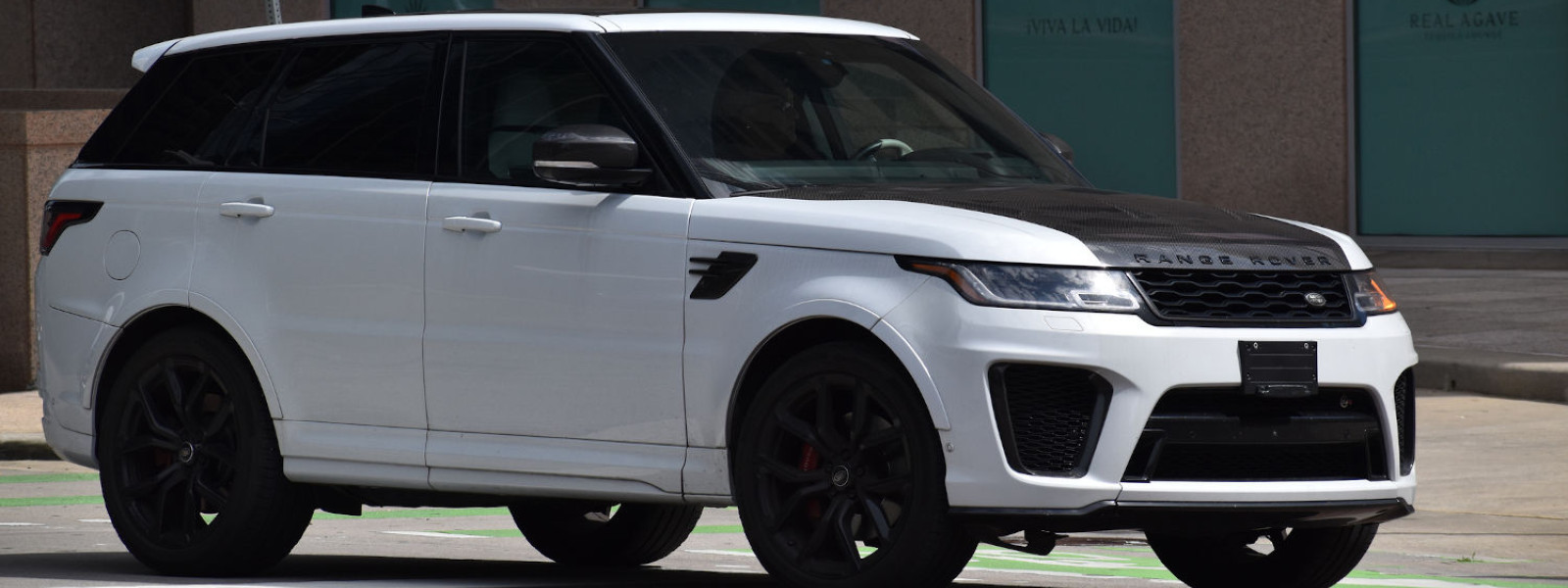
The Range Rover Sport is one of the most desirable used luxury SUVs in Canada. Its combination of genuine off-road capability, powerful engines, and a prestigious interior places it in a category that few competitors can match. In Toronto and the Greater Toronto Area, Range Rover Sports are a fixture of the used luxury market across every price point — from well-depreciated early L320 models to near-new L494 examples still commanding serious money.
But used Range Rover Sport reliability is a subject that requires honest, practical information. These are not simple vehicles. Every generation carries specific known issues — some minor and easily managed, others expensive if ignored or undisclosed at the time of purchase. The difference between a rewarding used Range Rover Sport ownership experience and a costly one almost always comes down to knowing which problems to look for, which model years carry the most risk, and whether those problems were properly addressed before you hand over your money.
This guide covers all three generations of the Range Rover Sport — the L320 (2005-2013), the L494 (2014-2022), and the L461 (2023+) — with specific common problems by year, system-level reliability analysis, and a clear buyer's verdict for each model year group. Keywords throughout: range rover sport, common problems, used range rover sport reliability, range rover sport problems by year.
Key Takeaways
- Range Rover Sport reliability depends heavily on the generation, model year, engine, and service history.
- The L320 generation is the highest-risk option because of age-related air suspension, cooling system, transfer case, and electrical issues.
- The L494 is generally more reliable than the L320, but buyers should still watch for diesel crankshaft risk, coolant pipe leaks, EGR issues, and neglected ZF gearbox fluid service.
- The L461 is still too new for long-term reliability patterns, so buying with warranty protection is the safest option.
- Air suspension is the most common problem across all Range Rover Sport generations and should always be inspected before purchase.
- A full JLR-compatible diagnostic scan and pre-purchase inspection are essential before buying any used Range Rover Sport.
- The 2017-2019 L494 is often the best used-market balance of value, reliability, and manageable maintenance costs.
- Toronto buyers should budget realistically for annual maintenance, especially on older or high-mileage examples.
Table of Contents
- Range Rover Sport Generations at a Glance
- Range Rover Sport Problems by Year — Quick Reference
- First Generation L320 (2005–2013): Common Problems
- Second Generation L494 (2014–2022): Common Problems
- Third Generation L461 (2023+): Early Reliability Indicators
- Problems That Affect All Range Rover Sport Generations
- Used Range Rover Sport Reliability: System-by-System Summary
- Buyer Verdict by Model Year
- What to Check Before Buying a Used Range Rover Sport
- Typical Annual Maintenance Costs in Toronto
- Frequently Asked Questions
Range Rover Sport Generations at a Glance
Three distinct generations of the Range Rover Sport have been sold in Canada. Each represents a significant step forward in platform sophistication and build quality, but each also introduces its own set of characteristic problems.
| Gen | Years | Engines (Canada) | Ownership Risk | Key Watch Points |
|---|---|---|---|---|
| L320 | 2005-2013 | 4.4 V8 / 4.2 SC / 5.0 V8 / 2.7 TDV6 / 3.0 TDV6 | HIGH | Earliest model; air suspension, transfer case, water pump, timing belt (diesel) are key concerns |
| L494 | 2014-2022 | 5.0 V8 SC / 3.0 SC V6 / 3.0 SD V6 / 2.0 Si4 / P400e PHEV | MEDIUM | Better built than L320; EGR, oil leaks, ZF gearbox service, air suspension still apply |
| L461 | 2023+ | 3.0 I6 P360/P400 / 4.4 V8 P530 / D250/D300 diesel | LOW | New platform; early software issues; standard LR maintenance discipline required |
Canadian Market Note
In Canada, the diesel (TDV6 and SDV6) variants of the Range Rover Sport were offered primarily during the L320 era and reintroduced on the L494. The most common powertrains in the Toronto used market are the 5.0-litre supercharged V8 and the 3.0-litre supercharged V6 on the L494, and the 4.4/5.0 V8 and 2.7/3.0 TDV6 diesel on the L320. Engine-specific problems differ significantly — always confirm the exact engine before assessing any vehicle.
Range Rover Sport Problems by Year — Quick Reference
The table below provides a year-by-year reference of the most commonly reported Range Rover Sport problems. This is a starting point for buyers; the detailed breakdowns by system follow in subsequent sections.
| Year(s) | Gen | Engine(s) | Known Issues to Check |
|---|---|---|---|
| 2006-2008 | L320 | 4.4 V8 / 4.2 C | Air suspension compressor, sunroof water ingress, front valve block leaks, park brake (EPB) drag, cooling system hoses, ZF 6HP gearbox fluid |
| 2009-2011 | L320 | 4.4 V8 / 5.0 V8 / 4.2 SC / 2.7 TDV6 | Water pump failure (very common on 4.4/5.0), transfer case front seal, supercharger coupling snout (SC), timing belt service critical (TDV6 diesel) |
| 2012-2013 | L320 | 5.0 V8 / 5.0 SC / 3.0 TDV6 | Air suspension height sensors and valve block, oil leaks valve covers & timing cover, EGR valve carbon (diesel), electronic parking brake |
| 2014-2016 | L494 | 5.0 SC / 3.0 SC / 3.0 SDV6 | SDV6 crankshaft failures (early batches), EGR cooler leaks (diesel), timing chain tensioner, air suspension compressor, ZF 8-speed needs fluid service |
| 2017-2019 | L494 | 5.0 SC / 3.0 SC /2.0 Si4 | Oil cooler pipe and crossover pipe coolant leaks (5.0 SC), vacuum pump oil leaks, throttle body clogging (3.0), battery drain (SSM software) |
| 2020-2022 | L494 | 5.0 SC / 3.0 Ingenium / P400e | Piston cooling oil jet solenoid (2.0D), door latch failures, infotainment software glitches, PHEV battery management software updates needed |
| 2023+ | L461 | 3.0 I6 / 4.4 V8 / 2.0D | Early-build software calibration issues, ADAS sensor calibration, new body control architecture; no widespread mechanical patterns yet established |
First Generation L320 (2005-2013): Known Problems in Detail
The L320 was built on the Discovery 3 platform and shared many components with it. It introduced the Range Rover Sport nameplate and proved enormously popular globally. However, as these vehicles age into the 12-20 year bracket, their complexity creates real ownership challenges for unprepared buyers. Used Range Rover Sport reliability on the L320 is directly tied to how consistently the previous owner maintained it.
Air Suspension — Most Common L320 Complaint
The L320's four-corner Electronic Air Suspension (EAS) is the single most reported problem area across the entire model run. The system controls ride height through air springs, an electric compressor, a valve block, and ride height sensors at each wheel. Any one of these components can fail, and all failures produce similar warning messages and reduced performance modes.
- Air springs (bags): The rubber bellows degrade with age and cold temperature cycling — Ontario winters accelerate this process. A leaking spring causes one corner to sag, triggering the suspension warning light. Replacement is straightforward but should be done per corner as needed.
- Air compressor: The compressor runs to maintain pressure when springs leak or when height adjustments are made. A leaking spring makes the compressor work constantly, burning it out prematurely.
- Valve block: The front and rear valve blocks direct air to individual springs. Internal valve failures cause specific corners to not raise or lower correctly.
- Height sensors: The linkage sensors at each wheel corner measure ride height and feed data to the suspension control module. Corroded or damaged sensor linkages produce false height readings and erratic suspension behaviour. Any L320 purchase must include a thorough air suspension inspection: park on level ground, check all four corners for equal height, walk away for 10 minutes and return to check for sagging, and listen during the test drive for compressor cycling.
Water Pump Failure — 4.4 and 5.0 V8 Engines
Water pump failure on the L320's AJ V8 family (4.4-litre naturally aspirated, 5.0 naturally aspirated, and 5.0 supercharged) is so common that it should be considered a service item rather than a failure. The plastic impeller on the original water pump degrades over time, reducing coolant circulation before the pump fails entirely. Symptoms include the temperature gauge creeping higher than normal, repeated coolant loss, and eventually overheating.
Any L320 V8 that has not had a documented water pump replacement should be assumed to need one.
Transfer Case Seal and Supercharger Issues
On supercharged L320 models, the transfer case front output seal is a common leak point — usually manifesting as ATF seeping from the front of the transfer case onto the undercarriage. Left unaddressed, low fluid levels cause transfer case wear. The supercharger coupling snout on early 4.2-litre supercharged models is also known to fail, producing noise and power loss. Both issues are diagnosable on a lift inspection.
2.7 TDV6 Diesel — Timing Belt Critical
The 2.7-litre TDV6 diesel fitted to some L320 models uses a timing belt (not a chain). The belt drives not only the camshafts but also a separate rear belt for the high-pressure fuel pump. Both belts must be replaced on schedule — typically every 100,000 km or 5 years, whichever comes first. A failed timing belt on this engine destroys it. Any L320 TDV6 without documented belt service history should have the belts replaced immediately upon purchase.
Electronic Parking Brake
The L320's electronic parking brake (EPB) uses a drum-in-disc design at the rear wheels. The EPB shoes wear and can drag, causing rear brake heat and premature rotor wear. The EPB motor and caliper actuators also fail with age. Diagnosis and repair requires specialist diagnostic tools — standard brake equipment cannot retract the rear calipers on these vehicles.
| System / Issue | Symptoms | Mainly Affects | Risk |
|---|---|---|---|
| Air springs | Corner sagging, suspension warning light | 2006-2013 all | HIGH |
| Air compressor | Constant cycling, suspension not raising | 2006-2013 all | HIGH |
| Water pump (V8) | Overheating, coolant loss, temperature fluctuation | 2006-2013 V8 | HIGH |
| Valve block | Single corner not raising/lowering, warning light | 2006-2013 all | MEDIUM |
| Transfer case seal | ATF leak under vehicle, drivetrain shudder | 2009-2013 | MEDIUM |
| SC coupling snout | Noise, power loss on supercharged models | 2006-2009 SC | MEDIUM |
| Timing belt (TDV6) | Engine destruction if missed — no warning | 2006-2013 diesel | HIGH |
| EPB shoes/actuator | Rear brake drag, heat, EPB warning | 2006-2013 all | MEDIUM |
| Sunroof drainage | Water ingress into cabin, damp carpets | 2006-2009 | MEDIUM |
| Height sensors | Erratic suspension, false fault codes | 2006-2013 all | LOW |
Second Generation L494 (2014-2022): Known Problems in Detail
The L494 represented a significant engineering step forward from the L320. A lighter aluminium-intensive body, revised suspension geometry, and an updated electronics architecture made it a substantially better vehicle. Used Range Rover Sport reliability on the L494 is meaningfully better than the L320, but this generation is not without its own well-documented issues. Several of these are engine-specific and some are more serious than the typical L320 wear items.
SDV6 Diesel (2014-2016): Crankshaft and Timing Chain Risk
The 3.0-litre SDV6 diesel in the L494 (designated AJD-V6 / 306DT) produced 256-306 bhp and was a popular choice for its torque and economy. However, early production units from 2014-2016 developed a significant problem: crankshaft failures, primarily occurring between 130,000-200,000 km. The failure manifests as sudden engine seizure with a metallic knock under load. A manufacturing issue in early crankshaft batches — related to insufficient bearing clearances and metallurgy — was identified as the root cause.
In addition to the crankshaft concern, early SDV6 engines also suffer from timing chain tensioner wear — evidenced by cold-start chain rattle that persists beyond 15-20 seconds — and EGR cooler leaks that allow coolant to enter the intake manifold. Buyers of 2014-2016 SDV6 models should request a full service history, check for any evidence of oil contamination, and have the engine properly scanned before purchase.
5.0 Supercharged V8 — Coolant Pipe and Oil Cooler Leaks
The 5.0-litre supercharged V8 is the most desirable engine in the L494 lineup for performance, but it has a specific coolant vulnerability: the oil cooler pipes and the crossover pipe that runs beneath the supercharger intake are prone to leaking. These internal coolant hoses use O-ring seals and quick-connect fittings that degrade with heat cycling. A leaking crossover pipe is particularly insidious because the coolant can evaporate on hot engine components before reaching the ground, causing gradual coolant loss with no visible puddle.
The vacuum pump, located at the rear of the engine, is also a documented oil leak source on the 5.0-litre V8 — watch for oil staining behind the engine on the firewall side.
ZF 8-Speed Gearbox — Fluid Service Non-Negotiable
The ZF 8HP automatic transmission fitted to all L494 models is a fundamentally excellent gearbox when properly maintained. The critical failing of many used L494 examples is that the transmission fluid was never changed — Land Rover originally designated it a lifetime fill, which it is not. Degraded fluid causes delayed engagement, torque converter shudder during light-throttle cruising, and eventually valve body wear.
3.0 Supercharged V6 — Throttle Body and EGR
The 3.0-litre supercharged V6 petrol engine is generally reliable but is known to develop clogged throttle bodies — a build-up of carbon deposits causes rough idle, hesitation, and the 'Restricted Performance' dashboard message. Throttle body cleaning or replacement resolves this. EGR issues on the diesel variants (clogged valves, leaking coolers) are documented across both the SDV6 diesel and 3.0 petrol with mild hybrid systems on later models.
Electrical Faults — Door Latches and Battery Drain
Two specific electrical issues affect the L494 disproportionately. First, door latch failures: the door latch mechanisms corrode internally, causing doors to not lock properly through central locking even when the system reports locked. This is both a security and safety concern.
Second, battery drain related to electronic modules not entering sleep mode — an issue acknowledged by JLR Canada under software update SSM 74635. Vehicles that have not received this update can experience chronic battery drain, particularly if an OBD dongle is connected to the diagnostic port.
| System / Issue | Symptoms | Mainly Affects | Risk |
|---|---|---|---|
| SDV6 crankshaft (2014-16) | Sudden seizure, metallic knock, oil pressure warning | 2014-2016 diesel | HIGH |
| Timing chain (SDV6) | Cold-start rattle over 15 sec; worsens with time | 2014-2017 diesel | HIGH |
| EGR cooler leak (diesel) | Coolant in intake, rough idle, white smoke | 2014-2019 diesel | HIGH |
| Coolant crossover pipe | Gradual coolant loss, no visible puddle | 2017-2022 5.0 SC | HIGH |
| Vacuum pump oil leak | Oil on firewall/rear engine area | 2014-2022 V8 | MEDIUM |
| ZF 8HP gearbox fluid | Delayed shifts, shudder, limp mode | 2014-2022 all | MEDIUM |
| Throttle body clogging | Rough idle, Restricted Performance message | 2014-2022 3.0 | MEDIUM |
| Door latch failure | Central locking not securing one or more doors | 2016-2022 | MEDIUM |
| Battery drain (software) | Dead battery, multiple phantom faults on startup | 2017-2020 | MEDIUM |
| Piston jet solenoid | Engine warning, reduced power (2.0D only) | 2019-2022 2.0D | MEDIUM |
| Air suspension (all) | As per L320 — compressor, springs, valve block | 2014-2022 all | MEDIUM |
Third Generation L461 (2023+): Early Indicators
The L461 represents a clean-sheet Range Rover Sport on the MLA-Flex aluminium architecture — the same platform as the full-size Range Rover L460. It is a fundamentally more advanced vehicle than either predecessor, with mild-hybrid technology standard across the range and a full PHEV option. As of 2025-2026, the L461 is too new to have accumulated the kind of high-mileage reliability data available for earlier generations.
Early owner reports and workshop feedback point to the following areas as worth monitoring on L461 examples:
- Software calibration: early production units experienced ADAS (adaptive cruise, lane-keep, emergency braking) calibration inconsistencies requiring dealer software updates. These are not mechanical failures but require JLR diagnostic software to address.
- New electrical architecture: the L461 uses an updated body control network with more modules. Early teething issues with module communication have been reported, typically resolved by software updates.
- PHEV battery management: the plug-in hybrid variants benefit from regular use of the charging system and updated battery management software. Buying an L461 PHEV that has never been plugged in raises questions about battery conditioning.
- Routine wear: brakes, tyres, and suspension consumables follow normal luxury SUV patterns. The air suspension specification continues from the L494 lineage and will develop the same wear characteristics over time.
L461 Buying Advice
For L461 buyers in the Toronto market, purchasing a certified pre-owned example with remaining manufacturer warranty is strongly recommended. The vehicle is too new for independent specialists to have accumulated comprehensive long-term failure data, and warranty protection is genuinely valuable during the first four to five years. An independent pre-purchase inspection is still worthwhile to identify any outstanding recall or software update status.
Problems That Affect All Range Rover Sport Generations
Certain issues recur across the L320, L494, and L461 because they are architectural characteristics of the Range Rover Sport platform rather than generation-specific engineering choices.
Air Suspension — Universal Concern
Every Range Rover Sport ever built uses electronic air suspension. The system is inherently more complex than coil spring suspension and has more components that can fail. While the L494 and L461 use updated compressor and valve block designs that are more reliable than the L320 originals, the underlying vulnerability is the same: age, cold temperature cycling, and high mileage degrade the rubber air spring bellows and the compressor internals. Any Range Rover Sport, regardless of year, should have its air suspension inspected as a priority before purchase.
Brake System Complexity
All Range Rover Sport models use electronically controlled rear calipers that cannot be serviced with standard brake equipment. Rear brake pad replacement and EPB adjustments require a diagnostic tool with JLR-compatible software to retract the caliper pistons. This means brake work on these vehicles must be performed by a specialist — it is not a job for a general workshop or a DIY driveway service.
Valve Cover and Ancillary Oil Leaks
Valve cover gaskets, timing cover seals, and various ancillary seals are documented leak sources on all Range Rover Sport engines. The leaks are generally low-pressure and slow-developing, but oil contamination on ancillary components (alternators, wiring looms,
sensors) causes secondary failures if left for years. An annual visual inspection of the engine bay catches these before they become expensive.
InControl Infotainment and Electronics
Range Rover Sport infotainment systems across all generations have attracted complaints ranging from sluggish response to random reboots. On the L494, the InControl Touch Pro system was significantly better than the L320's original unit but still susceptible to
software-related instability. A full restart of the system (holding the power and volume buttons simultaneously) resolves many infotainment issues. Persistent problems usually require a software update via a specialist.
Used Range Rover Sport Reliability: System-by-System Summary
The table below provides a consolidated reliability reference across all Range Rover Sport generations, rated by problem frequency based on workshop experience and owner community data.
| System | Generation | Problem Frequency | Context |
|---|---|---|---|
| Air Suspension | All gens | MEDIUM-HIGH | Wear and leak items — manageable with prompt attention |
| Engine (V8 petrol) | L320/L494 | MEDIUM | Water pump, oil leaks, coolant pipes; routine for a specialist |
| Engine (V6 petrol/diesel) | L320/L494 | MEDIUM | Diesel EGR, timing; petrol timing chain and oil leaks |
| Engine (2.0 Ingenium) | L494 late | MEDIUM | Piston jet solenoid, timing chain on diesel; generally solid |
| ZF Automatic Gearbox | All gens | LOW-MEDIUM | Reliable when fluid-serviced; neglect causes valve body issues |
| Transfer Case | L320 | MEDIUM | Seal leaks, Terrain Response coupling wear on high-mileage units |
| Electrical / InControl | L494 | MEDIUM | Door latches, battery drain (SSM software), infotainment reboots |
| Brakes | L494 | LOW | ECU-controlled calipers need specialist tools; pads/discs wear normally |
| Body / Interior | L320 | MEDIUM | Sunroof drainage, water ingress, seat electrical faults |
Range Rover Sport Buyer Verdict by Model Year
With all the above in mind, here is a consolidated buying recommendation for each model year group in the Toronto used market.
| Model Year & Gen | Buyer Verdict | Notes |
|---|---|---|
| 2006-2008 L320 | AVOID unless low price and pre-inspected | Very high age-related costs; ownership is a project, not transport |
| 2009-2011 L320 V8 | CAUTION — inspect thoroughly | Water pump and air suspension costs are near-certain; factor them in |
| 2012-2013 L320 diesel | GOOD value with history | 3.0 TDV6 is strong if highway-driven and well-maintained |
| 2014-2016 L494 | CAUTION on early SDV6 diesel | Crankshaft risk on early diesel; SC petrol models are more predictable |
| 2017-2019 L494 | RECOMMENDED with inspection | Best sweet spot: modern tech, depreciated price, known issues manageable |
| 2020-2022 L494 | GOOD — best used L494 | Most refined iteration; PHEV adds complexity but low mileage examples hold value |
| 2023+ L461 | CONSIDER — too new for full data | Strong platform; buy with remaining warranty if possible |
The Sweet Spot: 2017-2019 L494
Based on workshop experience and used market value, the 2017-2019 L494 Range Rover Sport with the 3.0-litre supercharged V6 (Si6) represents the best balance of value, reliability, and cost of ownership. These vehicles have depreciated significantly from new, the known issues are well-understood and mostly manageable, and a clean example with full service history offers years of excellent ownership at a fraction of the original purchase price. Avoid examples without service history or with unresolved warning lights.
What to Check Before Buying Any Used Range Rover Sport
Regardless of the model year, the following checks are non-negotiable for any used Range Rover Sport purchase in Toronto:
- CARFAX Canada report: accident history, number of owners, odometer consistency, lien status
- Full service history with receipts — not just the service interval sticker in the window
- Air suspension: equal ride height at all four corners; park and return after 10 minutes to check for sagging
- Oil filler cap: check underside for white emulsion (coolant mixing with oil)
- Transmission: clean, smooth shifts through all gears with no delay, clunk, or shudder
- Full JLR-protocol diagnostic scan: not a standard OBD reader — stored fault codes across all modules
- Undercarriage inspection on a lift: leaks, rust (sills, arches, floor), transfer case and diff seals
- Cold start: listen for timing chain rattle (petrol V6 and diesel V6), smoke colour from exhaust
- Test all electronics: infotainment, all seat functions, climate zones, sunroof, parking sensors, cameras
- Battery condition: particularly on diesel and PHEV models — test with a load tester, not just a voltage check
Pre-Purchase Inspection — Not Optional
A professional pre-purchase inspection by a Land Rover specialist typically includes a full lift inspection, JLR-protocol diagnostic scan, air suspension test, road test evaluation, and a written report with all findings and estimated repair costs. Given that undetected problems on a used Range Rover Sport can run into thousands of dollars, a professional inspection is one of the highest-return investments you can make before committing to a purchase.
Typical Annual Maintenance Costs in Toronto
Understanding ongoing costs is as important as knowing the purchase price. The following annual cost estimates are based on an independently maintained used Range Rover Sport in the Toronto area, covering routine service plus allowance for age-related repairs:
- 2006-2012 L320 (V8 petrol): $4,000-$8,000 per year — higher due to age-related components and air suspension maintenance
- 2012-2013 L320 (TDV6 diesel, maintained): $3,000-$5,500 per year — diesel fuel savings offset by higher parts costs
- 2014-2016 L494 (5.0 SC or 3.0 SC): $3,000-$5,000 per year — more reliable platform but still complex
- 2017-2019 L494 (3.0 Si6 or 5.0 SC): $2,500-$4,500 per year — best cost-to-ownership ratio in the lineup
- 2020-2022 L494 (all engines): $2,000-$4,000 per year — fewer age-related repairs but still needs specialist service
These estimates assume all maintenance is performed by a qualified independent specialist rather than a franchised dealer. Dealer rates for the same work are typically 35-55% higher.
Frequently Asked Questions
Is the Range Rover Sport reliable enough for a daily driver in Toronto?
Yes — with the right model year and proper maintenance. The 2017-2022 L494 with the 3.0 Si6 or 5.0 SC engine is used daily by thousands of owners without significant trouble, provided it receives proper servicing at a qualified specialist. The L320 generation is a less predictable daily driver due to its age-related complexity.
Which Range Rover Sport engine is the most reliable?
For the L494, the 3.0-litre supercharged V6 Si6 petrol is generally considered the most balanced choice: powerful enough for the vehicle, more predictable than the early SDV6 diesel crankshaft issue, and manageable on maintenance costs. The 5.0-litre supercharged V8 is exceptional for performance but carries slightly higher maintenance costs due to the coolant pipe vulnerabilities. For the L320, the 5.0 V8 naturally aspirated (2010-2013) is a stronger long-term choice than the older 4.4-litre AJ V8.
How many kilometres is too many for a used Range Rover Sport?
Mileage is less important than maintenance history and condition. A 2018 L494 with 150,000 km and full service history is a better purchase than an equivalent vehicle with 80,000 km and no receipts. That said, on an L494, approaching 200,000 km without documented transmission service, coolant system maintenance, and suspension inspection increases risk substantially.
L320 models above 200,000 km require careful evaluation and a lower purchase price to offset likely upcoming repair costs.
What is the most common Range Rover Sport problem across all years?
Air suspension. Every generation of Range Rover Sport uses electronic air suspension, and the springs, compressor, and valve blocks are finite-life components. On the L320 this is the single most commonly reported fault; on the L494 it remains a significant maintenance item. Budget for air suspension work when buying any used Range Rover Sport above 100,000 km.
Should I buy a diesel or petrol Range Rover Sport?
For Toronto buyers who drive significant highway distances, the diesel (TDV6 on L320 or SDV6 on L494) offers real fuel cost savings and impressive torque. However, the SDV6 diesel on the early L494 (2014-2016) carries the crankshaft risk noted in this guide, and diesel Range Rovers require regular highway driving to keep the DPF healthy — urban-only use accelerates DPF and EGR issues. For primarily urban driving, the petrol supercharged V6 or V8 is a lower-risk choice.
Does Westminster Motors service Range Rover Sports of all ages?
Yes. Westminster Motors services all Range Rover Sport generations, from early L320 models requiring air suspension and transfer case work through to late L494 and current L461 vehicles. We use JLR-compatible diagnostic software for full fault code reading, and our technicians have hands-on experience with every common fault documented in this guide.
Author: Avo Demirjian