Classic Car Restoration Guide: What You Should Know
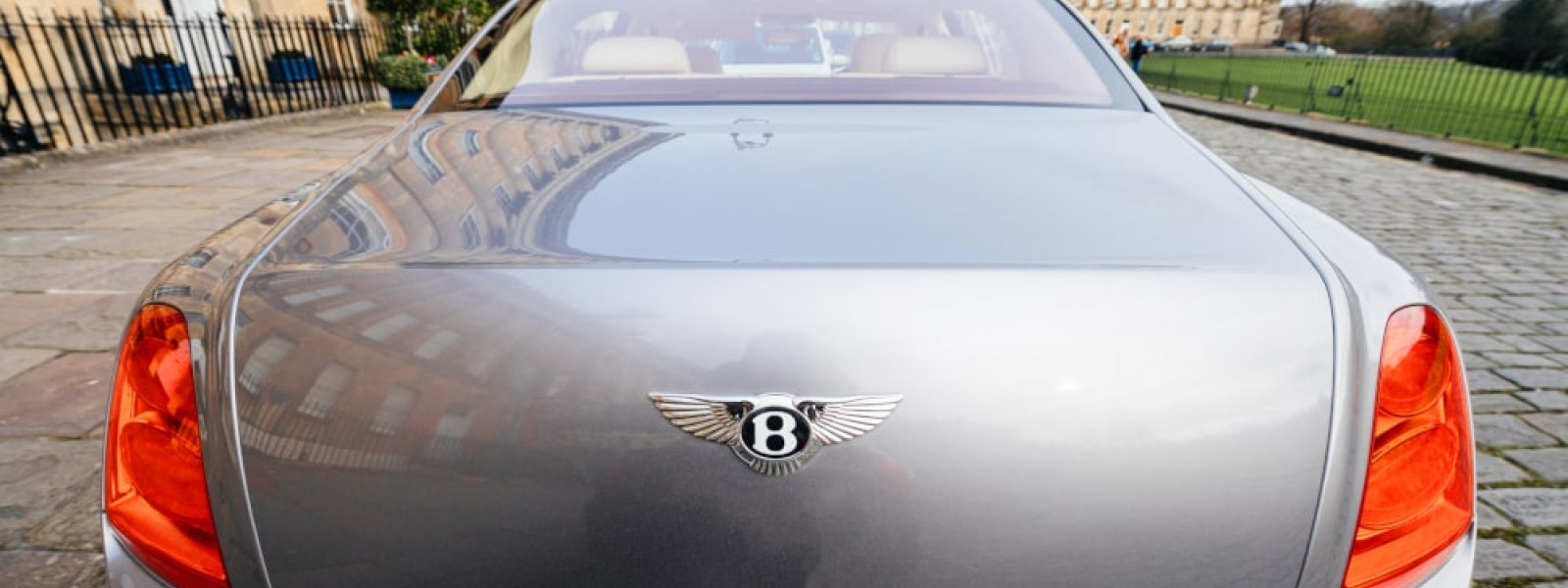
Restoring a classic car is one of the most rewarding projects an enthusiast or collector can undertake. It is also one of the most complex, time-intensive, and financially significant. A well-executed restoration preserves automotive history, increases the vehicle's value, and produces a machine that can be enjoyed and passed down for generations. A poorly planned or executed one can consume far more money than anticipated while delivering disappointing results.
This guide covers the complete professional classic car restoration process from initial consultation through final delivery, including the different restoration approaches available, a realistic breakdown of phases and costs, specific considerations for British classic cars, and Ontario-specific factors that Toronto owners need to understand. Whether you are planning a concours-level show car, a reliable driver, or a restomod, this guide will help you make informed decisions.
Key Takeaways
- Classic car restoration should start with a clear goal: concours, driver-quality, restomod, preservation, or phased restoration.
- A full professional restoration usually involves assessment, documentation, parts sourcing, structural work, bodywork, mechanical restoration, electrical work, interior restoration, reassembly, and road testing.
- Restoration timelines can be long, especially when rust repair, rare parts, or custom fabrication are involved.
- Costs vary widely depending on the vehicle’s condition, the restoration level, and how much hidden work is discovered during disassembly.
- British classic cars often require marque-specific knowledge, especially for Lucas electrical systems, rust-prone structures, and model-specific parts sourcing.
- Ontario owners should plan for winter storage, road salt corrosion, agreed-value insurance, and seasonal maintenance.
- Choosing a specialist restoration shop with documented processes, clear estimates, and experience with your vehicle type can prevent costly surprises.
Table of Contents
- Defining Your Restoration: Types and Approaches
- Concours vs. Driver Quality vs. Restomod
- The Classic Car Restoration Process: Phase by Phase
- Consultation, Assessment & Documentation
- Parts Sourcing: The Hidden Timeline Driver
- Structural Repairs, Bodywork & Paint
- Mechanical Restoration & Electrical Systems
- Interior Restoration
- Reassembly, Testing & Final Delivery
- Classic Car Restoration Costs in Toronto
- British Classic Cars: Model-Specific Restoration Considerations
- Restoring Land Rover Series & Range Rover Classic Models
- Classic Car Restoration in Ontario: What Owners Should Know
- Winter Storage & Seasonal Protection
- The Restomod Option
- Choosing the Right Restoration Specialist in Toronto
- Frequently Asked Questions
Defining Your Restoration: Types and Approaches
The first and most important decision in any restoration project is defining what outcome you are actually seeking. The term 'restoration' covers a wide spectrum of work and intent. Clarifying this at the outset determines the parts specification, the budget, the timeline, and what the finished vehicle will be.
| Type | Definition | Best For | Cost Level |
|---|---|---|---|
| Concours / Show | Identical to original factory spec in every detail | Maximum authenticity, trophy-worthy presentation | Highest — every part sourced or fabricated to period spec |
| Driver Quality | Mechanically reliable, cosmetically correct | Daily or regular use; original appearance maintained | Moderate — correct materials, functional reliability focus |
| Restomod | Period body with modern mechanical upgrades | Driving enjoyment, reliability, safety improvement | Moderate to high — depends on upgrades chosen |
| Preservation | Stabilised and protected without full strip-down | Keep a survivor car intact; prevent further decay | Lower — no paint or bodywork stripping |
| Rolling Resto | Incremental work over time while vehicle is in use | Budget-spread approach; car remains driveable | Lower per phase — total cost similar over time |
Concours vs. Driver Quality — The Practical Difference
A concours restoration aims to replicate the vehicle exactly as it left the factory, down to correct date-coded components, period-correct fasteners, and factory-matched paint mixing codes. This level of authenticity commands the highest budgets and is appropriate for particularly significant vehicles — rare variants, competition history cars, or low-production models where originality is the primary value driver.
A driver-quality restoration uses period-correct materials and correct specifications but does not obsess over date codes or factory-correct trace marks on fasteners. It produces a car that looks and drives correctly, can be insured and used with confidence, and holds strong value without the premium labour cost of concours work. For the vast majority of classic car owners in Toronto, driver quality is the most appropriate and financially sensible goal.
A restomod sits in a different category entirely. The exterior and cabin appearance are preserved — often to a very high standard — but modern mechanical underpinnings are fitted: fuel injection replacing carburettors, disc brakes replacing drums, modern suspension geometry, and sometimes a larger displacement engine. Restomods are growing in popularity because they deliver the aesthetics of the original period with the reliability and safety of modern engineering.
The Classic Car Restoration Process: Phase by Phase
A professional restoration follows a structured sequence of phases. Skipping or compressing phases — particularly the assessment, documentation, and structural work phases — is the primary cause of problems that surface after delivery. The timeline table below provides a realistic reference for a full restoration project.
| Phase | Typical Duration | Key Activities |
|---|---|---|
| Consultation & Vision | 1-2 weeks | Define scope, restoration type, budget range, and timeline expectations |
| Assessment & Documentation | 1-3 weeks | Full disassembly, photography, rust mapping, parts inventory, written estimate |
| Parts Sourcing | 2-8 weeks | OEM, NOS (new old stock), quality aftermarket, or custom fabrication ordered |
| Chassis & Structural Work | 2-6 weeks | Frame straightening, floor pan welding, rust repair, body-off structural work |
| Bodywork & Paint | 4-12 weeks | Panel repair, fabrication, primer, block sanding, colour coats, clear coat |
| Mechanical Restoration | 4-10 weeks | Engine rebuild, transmission, suspension, brakes, fuel system, cooling system |
| Electrical Rewire/Repair | 2-4 weeks | Harness inspection or replacement, charging system, lighting, accessories |
| Interior Restoration | 3-6 weeks | Upholstery, dash, carpet, headliner, trim, instruments, audio/climate |
| Reassembly & Detailing | 2-4 weeks | Full reassembly, alignment, fluid fills, final cosmetic detailing |
| Road Testing & Delivery | 1-2 weeks | Test drives, fine-tuning, adjustments, final quality check, client handover |
Phase 1 & 2: Consultation, Assessment, and Documentation
A professional restoration begins not with tools but with conversation and observation. The initial consultation establishes the owner's vision, the vehicle's history, and any known issues. This is followed by a comprehensive condition assessment — ideally with the vehicle raised on a lift — that maps rust locations, identifies previous repair work, assesses structural integrity, and establishes a complete inventory of what is present, what is salvageable, and what must be replaced.
Documentation is not optional. Every component that is removed should be photographed in situ before removal. The orientation of brackets, the routing of wiring looms, the colour of paint under trim pieces — all of this reference material is invaluable during reassembly, particularly on rare vehicles where workshop manuals may be incomplete or unavailable. A restoration without thorough documentation is a restoration that will struggle at the reassembly stage.
Phase 3: Parts Sourcing — The Hidden Timeline Driver
Parts sourcing is frequently underestimated as a timeline and budget factor. For popular classics — MGB, Triumph TR6, Land Rover Series — the aftermarket parts supply is extensive and lead times are short. For rarer British vehicles — early Jaguars, 1960s and 1970s Bentleys, limited-production models — NOS (new old stock) components may take months to locate globally, and custom fabrication may be required for panels or interior trim that are simply no longer available anywhere.
Parts sourcing decisions also have significant quality implications. The global market for classic car parts includes components of widely varying quality. Experienced restorers know which suppliers produce components to acceptable dimensional and material standards and which do not — a lesson usually learned expensively by first-time restorers buying on price alone.
Phase 4 & 5: Structural and Bodywork — The Foundation of Everything
The quality of a restoration's body and structural work determines the quality of everything that follows. A paint job applied over inadequately repaired metalwork will bubble and fail.
Reassembly over a chassis with residual flex will produce rattles and misalignment that no amount of later adjustment can correct.
Structural work on British classics is particularly demanding due to the variety of construction methods in use from the 1950s through the 1980s. Unitary (monocoque) construction as used on Jaguar E-Types and Triumph TRs requires skilled welding of stressed panels.
Body-over-frame construction as used on early Land Rovers and Range Rover Classics requires assessment of both the chassis frame and the body separately. Some British cars — notably early Jaguars and some coachbuilt vehicles — used ash wood framework bonded to steel body panels, requiring both metalworking and carpentry skills in the same project.
Rust treatment must be thorough and lasting. Surface rust treated only cosmetically will return. Proper rust remediation involves either complete panel replacement or removal of all affected metal, treatment of surrounding areas with rust converters and primers, and fabrication or replacement of the affected section. In Ontario, where road salt has penetrated decades of classic car ownership, this phase frequently reveals more work than the initial external inspection suggested.
Phase 6 & 7: Mechanical Restoration and Electrical Work
Engine rebuilding on a classic car is a combination of precision machining and skilled assembly. The cylinder block is bored or honed to accept new pistons and rings. The crankshaft is inspected, ground if necessary, and fitted with new bearing shells. The cylinder head is resurfaced, valve seats are ground, and new valve stem seals fitted. The complete assembly is torqued to specification in the correct sequence. On a properly rebuilt engine, everything is new or restored to new tolerances — not simply cleaned and reassembled.
British cars from the 1950s through the early 1980s have electrical systems with a justified reputation for complexity and unreliability. Lucas electrical components — universally present across Jaguar, Land Rover, Triumph, and British Leyland products of this era — require specialist knowledge to diagnose and restore. Many restorations opt for a complete rewire using a modern reproduction loom built to the original specification but with updated connectors and insulation materials that dramatically improve reliability. This investment typically costs more than refurbishing the original wiring but delivers a vehicle that starts and runs reliably for decades.
Phase 8: Interior Restoration
A correctly restored interior is as important to the vehicle's value and authenticity as the paint or mechanical work. For British classics, correct interior specification involves not just the right upholstery material and colour but the correct grain pattern for the leather, the correct carpet material (wool loop or cut pile depending on year and model), the correct dash covering material, and period-accurate headlining.
Instrument restoration deserves particular attention. Classic car gauges — Smiths, Jaeger, and VDO instruments are common across the British canon — can be rebuilt by specialist instrument restorers who replace movement components, reset calibration, and restore faces to original specification. This investment is far less expensive than sourcing replacement instruments and produces a result that is identical to original.
Phase 9 & 10: Reassembly, Testing, and Delivery
Reassembly of a fully restored vehicle is as skill-dependent as any other phase. The documentation produced during disassembly is put to work here: photographs confirm bracket orientations, wiring routes, and the subtle details that distinguish a correctly assembled car from one that is merely mechanically functional but visually incorrect.
Road testing is not a formality. A freshly rebuilt classic car will require adjustment — carburettor balance, ignition timing, valve clearances, wheel alignment, brake bias. A proper road test programme runs the vehicle through its full operating range, confirms that all systems function correctly, and identifies any vibrations, leaks, or anomalies while the vehicle is still in the workshop where they can be addressed. Delivering a vehicle before these adjustments are complete transfers problems to the owner that should never have left the shop.
Classic Car Restoration Costs in Toronto — A Realistic Guide
Cost is the aspect of classic car restoration that most frequently produces disappointment when not properly understood at the outset. The costs below represent estimates for professional workshop rates in the Greater Toronto Area. They are not guarantees — every vehicle is different, and a thorough assessment before work begins is the only reliable way to establish a project-specific budget.
A full restoration of a British classic in the Toronto market — bodywork, mechanical, interior, and electrical — will typically cost between $45,000 and $120,000+ depending on the vehicle, its initial condition, and the quality level targeted. Projects that begin with vague budgets and undefined scope routinely exceed their owners' expectations in cost, not because workshops are opportunistic, but because the true scope of work on an aged vehicle cannot be fully known until disassembly is complete.
British Classic Cars: Model-Specific Restoration Considerations
Westminster Motors specialises in British classic vehicles. The table below summarises key restoration considerations for the marques and models most commonly seen in our workshop.
| Model | Years | Key Restoration Considerations |
|---|---|---|
| Jaguar E-Type | 1961-1975 | Monocoque bodywork requires specialist welding; XK inline-6 eliable but seals age; wiring loom notorious |
| Jaguar XK120/140/150 | 1948-1961 | Steel over ash wood frame — both must be assessed; chrome brightwork hard to source; drum brakes need modernising |
| Land Rover Series I/II/III | 1948-1985 | Aluminium body over steel chassis — dissimilar metal corrosion; mechanical simplicity offsets complexity elsewhere |
| Range Rover Classic | 1970-1996 | Full-length ladder chassis rusts severely in Ontario; V8 Buick-derived engine well supported; EFI models need ECU attention |
| Bentley T-Series/ Mulsanne | 1965-1992 | Self-levelling hydraulic suspension complex to restore; coachbuilt bodywork unique; parts from specialist suppliers only |
| Rolls-Royce Silver Shadow | 1965-1980 | As per Bentley T — shared platform; hydraulic systems dominate the restoration; interiors extremely labour-intensive |
| Triumph TR4/5/6 | 1961-1976 | Relatively simple mechanicals; body panels well-supported; overdrive gearboxes need attention on higher mileage cars |
| MGB / MGB GT | 1962-1980 | Parts extremely well-supported; body sills rust severely; rubber bumper cars often debumpered as part of restoration |
Land Rover Series and Range Rover Classic — A Special Case
Land Rover Series vehicles (Series I, II, and III, 1948-1985) and early Range Rover Classics (1970-1996) occupy a unique position in the classic car world. Their aluminium body panels over steel chassis frames present a specific restoration challenge: dissimilar metal corrosion where aluminium body meets steel chassis is extremely common and often more extensive than external inspection suggests. The galvanic reaction between the two metals, accelerated by moisture and road salt, destroys both the aluminium body mounting points and the steel chassis rails beneath them.
However, these vehicles have an offsetting advantage: their mechanical systems are straightforward by any standard, parts support is excellent globally, and the community of knowledge around them is deep. A Series III Land Rover, properly restored, is one of the most mechanically reliable classics available — because there is very little to go wrong.
The Range Rover Classic V8 is a more complex proposition. The Buick-derived 3.5-litre aluminium V8 is well-supported and responds well to rebuilding, but the self-levelling suspension of later models requires specialist knowledge, and the chassis rust on Ontario-kept examples is invariably severe. Finding a Range Rover Classic with a genuinely sound chassis in the Toronto market is the critical prerequisite for a worthwhile restoration project.
Classic Car Restoration in Ontario: What Toronto Owners Need to Know
Restoring a classic car in Ontario comes with specific practical and regulatory considerations that differ from other markets. The table below covers the most important factors for Toronto-area owners.
| Consideration | What It Means for Toronto / Ontario Owners |
|---|---|
| Winter road salt corrosion | Undercarriage, sills, floor pans, and chassis rails on Ontario-kept vehicles need thorough rust assessment regardless of exterior condition |
| Seasonal storage requirements | Proper storage is critical — temperature-controlled, dehumidified, trickle-charged battery, fuel stabiliser, lifted off tyres |
| Historic vehicle plates | Ontario's Historic Vehicle licence plates require the vehicle to be at least 30 years old; different from classic car insurance requirements |
| Classic car insurance | Agreed value policies (not actual cash value) are essential; usage restrictions vary; Westminster Motors can advise on documentation for insurers |
| Emissions testing exemption | Vehicles manufactured before 1988 are currently exempt from Ontario's Drive Clean emissions testing requirements |
| Cross-border parts sourcing | USD exchange rate affects parts costs for US-sourced components; import duties apply on some fabricated parts — factor into budget |
Storage — The Most Underestimated Element of Classic Car Ownership in Canada
Ontario's winters are genuinely damaging to classic cars that are not properly stored. Road salt from October through April, freeze-thaw cycling, humidity fluctuations, and rodent activity combine to undo years of careful restoration work on vehicles left in unheated, unsealed garages. Proper classic car winter storage in Toronto requires a climate-controlled, dehumidified, secure environment with a concrete floor that allows air circulation under the vehicle. Before placing a freshly restored vehicle into storage, the fuel system should be treated with a quality fuel stabiliser, the battery disconnected and placed on a maintenance charger, the tyres either removed and stored flat or the vehicle placed on stands to prevent flat-spotting, and the car covered with a breathable cotton dust cover — never a non-breathable plastic sheet that traps moisture against the paintwork.
Westminster Motors offers seasonal storage for clients' classic vehicles. Our North York facility provides climate-controlled, secure, monitored storage with the option of a pre-storage inspection and a pre-season recommissioning service to ensure vehicles are ready for use when warmer months arrive.
The Restomod Option: Modernising While Preserving Character
The restomod approach has grown significantly in popularity over the past decade, and for good reason. Many classic cars — particularly those from the 1960s and 1970s — are visually stunning but genuinely difficult to drive in modern traffic conditions. Drum brakes that require significant pedal effort, carburettors that need warm-up time, marginal lighting, and a complete absence of safety features make some classics stressful rather than enjoyable to use.
A well-executed restomod addresses these limitations while preserving the visual character of the original. Common interventions include:
- Brake conversion from drums to disc brakes front and rear, with a modern servo-assisted master cylinder
- Carburetor-to-fuel-injection conversion, either using a period-appearing throttle body injection or a hidden modern EFI system
- Suspension geometry upgrade — road-feel and handling significantly improved with modern geometry while retaining original appearance
- 5-speed manual or modern automatic transmission conversion for highway usability
- LED lighting conversion within original lamp housings — dramatically improved visibility without altering appearance
- Hidden modern audio and climate control integration
- Upgraded alternator and modern wiring to support additional electrical loads
What a restomod should not do is compromise the visual authenticity of the vehicle in ways that are immediately apparent. Engine bay modifications visible through an open bonnet, non-period wheels, and body modifications that alter the character of the design are the restomod mistakes that reduce rather than enhance the vehicle. The goal is a car that drives like it was designed today and looks exactly as it did when it left the factory.
Choosing the Right Restoration Specialist in Toronto
The choice of restoration workshop is the single most consequential decision in a classic car restoration project. A high-quality workshop with the right expertise will deliver the vehicle you envisioned. The wrong choice will cost you time, money, and potentially irreplaceable original components.
| What to Ask / Check | Why It Matters |
|---|---|
| Marque-specific experience | Has the shop worked extensively on your make and model? Ask to see comparable completed projects. |
| Documented project process | Do they provide a written scope of work, photographic documentation, and written updates throughout the project? |
| In-house vs. outsourced work | What is done in-house vs. sent out? Bodywork, machining, and upholstery are commonly outsourced — confirm to qualified sub-contractors. |
| Parts sourcing transparency | Will they disclose parts sources? OEM, NOS, quality aftermarket, or reconditioned — all are valid but you should know which. |
| Written estimate and timeline | Is a written estimate with labour rate and parts costs provided before work begins? Are change-order procedures clear? |
| References and completed work | Can they provide references from previous clients with similar projects? Can you speak to or visit completed restorations? |
| Insurance and storage | Is the vehicle insured while in the shop's custody? Is storage secure, climate-controlled, and appropriate for your vehicle? |
| Warranty on workmanship | What warranty does the shop offer on completed work? Reputable restorers stand behind their craftsmanship. |
The Independent Specialist Advantage
For British classics in Toronto, an independent specialist with deep marque knowledge consistently delivers better results than a general restoration workshop. The reason is straightforward: British cars from the 1950s through the 1980s have electrical systems, mechanical peculiarities, and parts ecosystems that require specific experience to navigate efficiently. A specialist who has restored twenty E-Types knows exactly where the rust hides, which reproduction parts meet specification, and which shortcuts will cause problems — knowledge that a generalist workshop must learn expensively on your vehicle.
Westminster Motors has specialised in British vehicles for decades. Our experience with Jaguar, Land Rover, Bentley, and Rolls-Royce classics means we bring accumulated knowledge to every project that a generalist workshop simply cannot offer.
Frequently Asked Questions
How do I know if my classic car is worth restoring?
The financial calculation depends on three numbers: the current market value of the vehicle in fully restored condition, the cost of purchasing the specific car you have (or are considering), and the realistic restoration cost. If acquisition plus restoration cost exceeds restored market value by a significant margin, the project makes sense only if the non-financial value — personal attachment, rarity, historical significance — justifies the difference. Westminster Motors can help you establish realistic current market values for British classics as part of an initial consultation.
Should I buy a car that needs restoring or one already restored?
A professionally restored vehicle with full documentation of the work performed is almost always a better value than purchasing an unrestored car and commissioning the same work yourself, unless you have specific skills, facilities, or parts access that offset the workshop cost. The exception is vehicles with strong sentimental significance — a family car, a model you have always wanted to restore yourself. In those cases, the project value goes beyond the financial arithmetic.
How do I keep my classic car protected after restoration?
Post-restoration protection requires four elements: proper climate-controlled storage during winter, a regular use programme (cars that sit develop more problems than those that are driven), a consistent relationship with a specialist workshop for annual servicing and inspection, and agreed-value classic car insurance that reflects the restored value, not the market value of an equivalent unrestored vehicle.
Can Westminster Motors restore vehicles that were not originally British?
Our primary expertise is in British marques — Jaguar, Land Rover, Range Rover, Bentley, Rolls-Royce, Triumph, and MG. We do evaluate enquiries for other European classics on a project-by-project basis where our skills and parts access are applicable. Contact us for an initial discussion about your specific vehicle.
What happens if more work is needed than the original estimate?
On any honest restoration, disassembly reveals work that was not visible externally. Our process includes a documented change-order procedure: when additional work is identified beyond the original scope, we notify the client with photographs, a written explanation of the finding, and an updated cost before proceeding. No additional work is undertaken without client approval. This transparency is fundamental to our client relationships.
Do you offer storage for classic cars between restoration phases or during winter?
Not as a stand-alone service. Westminster Motors doesn't offer classic car storage on its own — our storage is provided for vehicles that are with us for restoration or seasonal work over the winter months. While a car is in for work, we do provide safe, heated storage at our North York facility, along with the option of a pre-storage inspection and a pre-season recommissioning service to ensure it's ready for use when warmer months arrive.
Author: Avo Demirjian