Used Range Rover Inspection Checklist: What to Check Before You Buy in Toronto
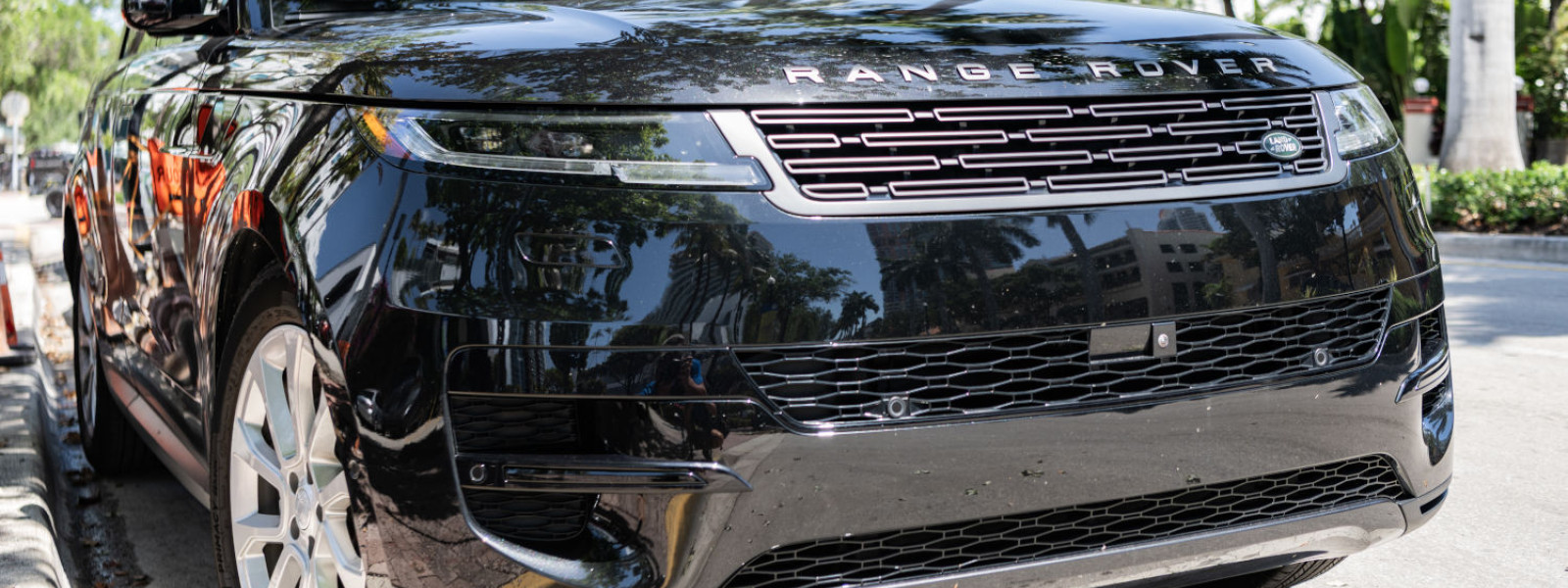
Buying a used Range Rover in Toronto is one of the most rewarding — and potentially risky — luxury vehicle purchases you can make. The Range Rover's combination of prestige, off-road capability, and interior refinement is unmatched in its class, but its complexity means that a poorly maintained or damaged example can quickly become an extremely expensive ownership experience.
The Toronto used market is active, with Range Rovers changing hands through private sales, dealerships, and auctions. Prices can look attractive, but the gap between a well-maintained example and a neglected one is enormous — not just in asking price, but in the repair bills that arrive within the first year of ownership.
This guide gives you a comprehensive inspection checklist covering every major area of the vehicle, the specific issues to look for by system, a model-year guide to known concerns, and a list of the red flags that should make you walk away from any deal regardless of price.
Key Takeaways
- A used Range Rover can be a great buy in Toronto, but only if the vehicle has a strong service history and passes a proper inspection.
- The biggest risk areas are air suspension, rust, coolant condition, transmission behaviour, DPF issues on diesels, and stored fault codes.
- A clean exterior and low mileage do not guarantee good condition; maintenance records and diagnostics matter more.
- Always test drive the vehicle for at least 20–30 minutes to check shifting, suspension, braking, warning lights, and drivetrain behaviour.
- A professional pre-purchase inspection can reveal hidden repairs and help you avoid expensive first-year ownership costs.
Table of Contents
- Before You Even See the Vehicle
- Range Rover Model Year & Generation Guide
- Exterior & Body Inspection
- Interior Inspection
- Mechanical Inspection
- Engine-Specific Checks by Powertrain
- OBD Diagnostic Scan — The Non-Negotiable Step
- The Test Drive — What to Evaluate
- Red Flags — Walk Away If You See These
- Why You Need a Professional Pre-Purchase Inspection in Toronto
- Frequently Asked Questions
1. Before You Even See the Vehicle
The work of a used Range Rover inspection starts long before you arrive at the seller's location. These steps take minutes and can save you thousands.
Run a CARFAX Canada or CarProof Report
A vehicle history report is the first non-negotiable step. It will reveal accident history, number of previous owners, odometer discrepancies between service records and registration, lien status, and whether the vehicle has been declared a total loss. Never proceed without one, regardless of how credible the seller appears.
Check the VIN Plate Consistency
The VIN should appear on the dashboard (visible through the windscreen), on the driver's door jamb sticker, on the engine block, and on the ownership documents. Any mismatch between these is a serious flag for title fraud or a vehicle assembled from written-off parts.
Research the Specific Model Year
Not all Range Rovers are equal across years. The table in Section 2 of this guide outlines known concerns by generation. Understanding what issues are common for the year you are viewing means you know exactly what to probe during the physical inspection.
Ask the Seller These Questions Before Visiting
- Is the full service history available, and are receipts present for all major work?
- Has the vehicle ever had a DPF issue, air suspension fault, or transmission service?
- Has the vehicle ever been in an accident? Does the CarFax report show any claims?
- When was the last oil change and what oil specification was used?
- Are there any current warning lights on the dashboard?
- Has the timing chain ever been replaced or inspected? (V6 engines)
2. Range Rover Model Year & Generation Guide
Understanding which generation and model year you are looking at shapes everything that follows. The table below provides a quick reference.
| Year Range | Generation | Key Features | Watch Points |
|---|---|---|---|
| 2010-2012 | L322 4th Gen | Terrain Response, V8/V6 petrol | Air suspension, transfer case seals, timing chain |
| 2013-2017 | L405 5th Gen | Td6 diesel introduced 2016, luxury upgrade | Air suspension, electric parking brake, Terrain Response 2 |
| 2018-2021 | L405 facelift | Updated infotainment, plug-in hybrid option | DPF on diesels, mild electrical gremlins on early units |
| 2022+ | L460 6th Gen | New platform, mild hybrid standard | Early production software, ADAS calibration, new body control modules |
|
Toronto Market Note The 2016-2020 L405 with the Td6 diesel engine represents the sweet spot of the Toronto used market: modern enough to have current technology, old enough to have depreciated significantly, and well-understood by independent specialists. Diesel examples with full service history and highway-heavy usage patterns are the most desirable finds. |
3. Exterior & Body Inspection
Paint & Panel Consistency
Stand at each corner of the vehicle and look down the body panels from a low angle in natural light. Inconsistent paint depth, overspray on rubber trim, or slight colour mismatches between adjacent panels are signs of accident repair. A paint depth gauge (inexpensive, available at any automotive store) can confirm repainted panels — factory paint on steel reads 90-130 microns; repainted panels typically read 150-400+ microns.
Panel Gaps
Check door, hood, and tailgate gaps for uniformity. Uneven gaps are a reliable indicator of accident damage or poor-quality bodywork repair. The Range Rover is assembled to tight tolerances — significant unevenness is not a manufacturing variation.
Rust — The Toronto Concern
Ontario's heavy road salt use makes rust the single most important body concern for Toronto buyers. Check thoroughly in these areas:
- Wheel arch lips and inner arches — common rust initiation points on older L322 and L405 models
- Front and rear sill ends, particularly where the sill meets the door aperture
- Around the tow hitch mounting points on the rear undercarriage
- Boot floor edges and spare wheel well (if equipped)
- Under the front and rear bumpers where mud and salt accumulate
Surface rust on brake rotors from sitting is normal and not a concern. Structural rust on chassis rails, sills, or floor pans is a deal-breaker.
Glass, Lights & Seals
Check all glass for chips, cracks, and delamination in the laminate. Inspect headlight lenses for moisture ingress — a sign of failed seals that can affect lighting performance and require costly replacement. Check rubber door seals for cracking or compression failure, which leads to wind noise and water ingress.
| Check Item | What to Look For | Risk Level |
|---|---|---|
| Paint depth consistency | Use paint gauge; factory steel reads 90-130 microns | HIGH |
| Panel gap uniformity | Uneven gaps indicate accident repair or poor body work | HIGH |
| Wheel arch rust | Check inner and outer arch lips for bubbling or flaking | HIGH |
| Sill rust | Probe sill ends and underside for structural corrosion | HIGH |
| Glass condition | Chips, cracks, delamination, moisture in headlights | MEDIUM |
| Door and boot seals | Cracked or compressed seals cause wind noise and water ingress | MEDIUM |
| Bumper alignment | Misaligned bumpers suggest accident impact even without paint damage | MEDIUM |
| Undercarriage corrosion | Inspect tow hitch mounts, chassis rails, and floor pans | HIGH |
4. Interior Inspection
Leather & Trim Condition
Range Rover interiors are designed to last, but wear patterns reveal true usage. Check the driver's seat bolster, the base of the seat, steering wheel leather at the 9 and 3 o'clock positions, and the door pull areas. Excessive wear relative to the claimed mileage is a strong indicator the odometer reading has been tampered with.
Water Ingress
Water ingress is a persistent concern on older Range Rovers and a significant repair cost. Check the following areas carefully:
- Boot floor and spare wheel well — lift the boot liner and press on the carpet
- Rear footwell carpets under the rear seats
- A-pillar trim and front footwells for staining or damp smell
- Under the rear bench seat cushions for mould or moisture
Any damp smell, staining on carpet, or visible mould is a serious concern. Water damage can affect electronic modules under the seats and floor, leading to intermittent electrical faults that are extremely difficult to diagnose.
Electronics & Technology
The Range Rover's InControl infotainment and electronic systems are comprehensive but can develop faults. Test every function:
- Infotainment system — navigation, Apple CarPlay/Android Auto, Bluetooth pairing, screen responsiveness
- All climate control zones, heated/ventilated seats, heated steering wheel
- Electric seat adjustments and memory positions — test all movements
- Panoramic sunroof operation (opening, tilting, closing) and check for water staining on headliner
- All windows, mirrors, and electric door handles
- Reversing camera clarity and parking sensor function
- Driver assistance systems — lane keep, adaptive cruise, emergency braking
Dashboard Warning Lights
After starting the engine and allowing all warning lights to extinguish, photograph the dashboard. Any light remaining on is a fault requiring investigation. Pay particular attention to the check engine light, air suspension warning, hill descent control warning, and any orange or red symbols not immediately explained.
| Check Item | What to Look For | Risk Level |
|---|---|---|
| Leather wear vs. mileage | Disproportionate wear suggests odometer fraud | HIGH |
| Boot floor moisture | Lift liner and press carpet for dampness | HIGH |
| Rear footwell dampness | Water ingress affects under-seat modules | HIGH |
| Infotainment function | Test nav, Carplay, Bluetooth, screen touch | MEDIUM |
| All seat movements | Electric faults are costly on luxury seating systems | MEDIUM |
| Sunroof operation | Check for roof liner water staining and smooth travel | MEDIUM |
| Dashboard warning lights | Photograph cluster after startup; note any remaining lights | HIGH |
| HVAC and climate zones | All zones, heated/cooled seats, heated steering wheel | MEDIUM |
5. Mechanical Inspection
Engine Bay
Check the engine bay for signs of oil leaks, particularly around the valve cover gaskets, oil filler cap area, and lower sump. A small amount of surface grime is expected on any used vehicle, but soaked components or fresh oil on the underside of the engine suggest an active leak.
Check coolant condition — it should be clean and coloured (typically green or orange). Milky or discoloured coolant is a warning sign for head gasket compromise. Check the oil on the dipstick: it should be amber to dark brown; black sludge suggests extended oil change intervals.
Air Suspension System
The Range Rover's air suspension is one of its defining features and one of its most common repair items. Test it thoroughly:
- Park on level ground and check that all four corners sit at equal ride height
- Walk away and return after 10 minutes — if the vehicle has sagged, there is a leaking air spring or compressor fault
- During the test drive, select each suspension height mode and confirm the vehicle raises and lowers smoothly
- Listen for the compressor running excessively or repeatedly cycling — this indicates a leak
- Air suspension warning lights or fault messages are immediate red flags
Air spring replacement costs $600-$900 per corner in Toronto. Compressor replacement typically runs $800-$1,400. A vehicle with four failing springs and a worn compressor can require $4,000+ in suspension work alone.
Transmission — ZF 8-Speed Automatic
The ZF 8-speed automatic fitted to all Range Rovers from 2013 onward is generally reliable when properly serviced. However, the transmission fluid is often treated as a lifetime fill by owner-operated dealers — it is not. Fluid degradation causes delayed engagement, harsh shifting, and eventually valve body wear.
During the test drive, evaluate:
- Smooth engagement from Park into Drive and Reverse — any clunk or delay is a concern
- Clean upshifts and downshifts at varied speeds
- No shudder during light-throttle cruising (torque converter clutch shudder)
- No slipping, hesitation, or unexpected revving between gear changes
Transfer Case & Driveline
Engage and test Terrain Response modes during the test drive. Confirm the centre differential and transfer case engage without noise or warning lights. A clunk when engaging 4WD from a standstill may indicate worn transfer case mounts. Check underneath for any leaks from the transfer case or differentials — these are common on higher-mileage examples.
Brakes
Inspect rotors through the alloy wheels for scoring, deep grooves, or rust lip build-up indicating the pads are very thin. During the test drive, brake firmly from 60 km/h on a clear road — the vehicle should stop in a straight line with no pedal pulsation. Range Rover brake pad and rotor replacement is more expensive than average; factor this into your offer if replacement is imminent.
| Check Item | What to Look For | Risk Level |
|---|---|---|
| Oil leaks — engine | Check valve covers, sump, rear main seal | HIGH |
| Coolant condition | Milky or discoloured coolant = head gasket risk | HIGH |
| Air suspension — ride height | Equal height all corners; recheck after 10 min parked | HIGH |
| Air compressor cycling | Excessive cycling indicates active air leak | HIGH |
| Transmission engagement | Clean shifts; no clunk, delay, or shudder | HIGH |
| Transfer case engagement | Terrain Response modes engage without noise or warnings | MEDIUM |
| Driveline leaks | Inspect diff and transfer case for oil seepage | MEDIUM |
| Brake rotor condition | Check for deep scoring and rust lip through wheels | MEDIUM |
6. Engine-Specific Checks by Powertrain
Td6 3.0-Litre Diesel (2016-2021)
The diesel is generally reliable but has specific vulnerabilities:
- DPF warning light or recent forced regeneration — ask for diagnostic history
- EGR valve carbon buildup — symptom is rough idle and black smoke on acceleration
- Injector condition — hard starting when cold can indicate injector wear on higher mileage units
- Turbocharger shaft play — insert a finger and check for lateral movement; slight axial play is normal, lateral play is not
- Oil specification — confirm low-ash diesel spec oil has been used throughout; wrong oil destroys the DPF
Si6 / Si4 3.0 / 2.0-Litre Petrol (Supercharged & Turbocharged)
- Supercharger whine or belt squeal on the older 5.0/3.0 supercharged units
- Timing chain rattle at cold start — particularly on earlier Si6 and Si4 engines
- Coolant hose condition on the supercharged models — they run hot and hoses age
- Carbon buildup on intake valves (direct injection engines) — requires periodic walnut blasting
- Oil consumption — a small amount is acceptable; more than 1L per 3,000 km warrants investigation
P400e Plug-In Hybrid
- High-voltage battery state of health — request a battery diagnostic report
- Charging port condition and test all charging modes (Level 1, Level 2)
- Electric-only range claim — test it; a healthy battery should achieve close to the rated range
- Confirm software has been updated to the latest version for battery management
| Check Item | What to Look For | Risk Level |
|---|---|---|
| DPF status (diesel) | No warning lights; ask about regeneration history | HIGH |
| EGR condition (diesel) | Rough idle or black smoke suggests carbon buildup | MEDIUM |
| Timing chain (petrol V6) | Cold-start rattle indicates stretch — costly repair | HIGH |
| Turbo shaft play | Lateral play = imminent failure; axial only is acceptable | HIGH |
| Coolant hose condition | Crack or swelling on supercharged models = replacement due | MEDIUM |
| HV battery health (PHEV) | Request diagnostic report; check electric-only range | HIGH |
| Oil consumption level | More than 1L per 3,000 km warrants engine investigation | MEDIUM |
| Oil specification used | Wrong oil on diesel damages DPF and injectors | HIGH |
7. OBD Diagnostic Scan — The Non-Negotiable Step
A standard OBD-II dongle from a parts store is not sufficient for a Range Rover inspection. The vehicle's systems communicate across proprietary Jaguar Land Rover protocols that require dedicated diagnostic equipment — tools like JLR SDD (Symptom Driven Diagnostics), IDS, or professional-grade systems such as Autel or iCarsoft LR.
A full diagnostic scan should:
- Read all fault codes across every module — not just the engine ECU
- Reveal stored (historical) codes that were cleared but never repaired
- Report the status of the air suspension, transmission control module, transfer case, ABS, airbag, and body control modules
- Identify pending codes that have not yet triggered a warning light
A vehicle with dozens of stored codes spread across multiple modules has deferred maintenance throughout its systems. A clean scan on an older high-mileage vehicle is rare, but four to six minor sensor codes are very different from codes across the suspension, transmission, and engine simultaneously.
|
Westminster Motors Diagnostic Service Westminster Motors performs full JLR-protocol diagnostic scans as part of our pre-purchase inspection service. We provide a written report of all active and stored fault codes with plain-English explanations and estimated repair costs, giving you a complete picture before you make an offer. |
8. The Test Drive — What to Evaluate
Never buy a used Range Rover without a test drive of at least 20-30 minutes. Short drives in a parking lot reveal nothing about drivetrain health. You need to evaluate the vehicle at highway speeds, in stop-and-go conditions, and ideally on a rough surface.
Cold Start
Arrive before the seller starts the vehicle if possible. A cold start reveals issues that disappear once the engine is warm: timing chain rattle (petrol V6), diesel injector clatter (louder than normal on worn injectors), excessive smoke on startup, and the time the air suspension takes to reach its correct ride height from cold.
Highway Driving
- Confirm the transmission shifts smoothly through all 8 gears without hesitation
- Check for steering wheel vibration (wheel balance or worn tyres)
- Evaluate wind noise — excessive noise at highway speed suggests failed door seals
- Test adaptive cruise and lane-keeping features if equipped
- Confirm the air suspension maintains a consistent ride height at speed
Urban Driving
- Evaluate stop/start system function (if equipped and enabled)
- Test braking from 60 km/h — straight, no pulsation, no pulling
- Check steering for play, pulling, or vibration through the wheel on braking
- Test Terrain Response mode changes and confirm no warning lights appear
- Evaluate turning circle and listen for front CV joint clicking on full lock
After the Test Drive
Immediately after parking, look under the vehicle for fresh drips. Check for steam or smoke from the exhaust. If the weather is cool, a small amount of water vapour from the exhaust on startup is normal; blue or white smoke is not. Recheck that the air suspension has not sagged while parked.
9. Red Flags — Walk Away If You See These
Some findings during inspection are serious enough to warrant walking away from a purchase regardless of the asking price or the seller's explanation. The table below outlines the most critical red flags for used Range Rovers in the Toronto market.
| Red Flag | Why It Matters |
|---|---|
| Rust under wheel arches or sills | Structural corrosion is extremely expensive to rectify properly |
| More than 2 previous owners with no service history | Gaps in maintenance often mean hidden deferred repairs |
| DPF warning light or recent forced regen (diesel) | Blocked DPF can cost $2,000+ to replace |
| Gearbox jerks, slips, or delays (ZF 8-speed) | Transmission service often neglected; rebuild costs $4,000+ |
| Air suspension compressor noise or uneven ride height | Air suspension repairs routinely cost $1,500-$3,500 |
| Multiple fault codes across different systems | Sign of deferred electrical or sensor issues |
| Coolant milky or oil level over-full | Head gasket failure is expensive on all Range Rover engines |
| Accident history not disclosed by seller | Frame damage affects resale and safety permanently |
| Recent oil change but no receipts prior | Often done to hide a failing engine or dark oil history |
| Timing chain rattle at cold start (3.0 V6 gasoline) | Timing chain stretch is a known cost on earlier Td6 and Si6 engines |
|
Negotiating on Findings If your inspection reveals issues but the vehicle is otherwise solid and priced attractively, use your findings as legitimate negotiating leverage. A blocked DPF, worn air springs, or imminent brake work are quantifiable costs that should be reflected in the purchase price. Always get written quotes from a specialist before negotiating a reduction. |
10. Why You Need a Professional Pre-Purchase Inspection in Toronto
Even an experienced car buyer will miss issues on a used Range Rover that a trained Land Rover specialist will catch immediately. The vehicle's complexity — air suspension, electronic terrain management, proprietary electrical architecture, diesel emission systems — requires specialist knowledge to evaluate properly.
A professional pre-purchase inspection by an independent specialist (not a dealer trying to sell the vehicle) typically costs $200-$400 in Toronto and includes:
- Full lift inspection of the undercarriage, including chassis, sills, floor pans, and driveline components
- Complete JLR-protocol diagnostic scan of all electronic modules
- Air suspension function test and leak check
- Engine bay inspection including oil condition, coolant analysis, and visual leak assessment
- Transmission fluid condition check
- Road test evaluation by a technician familiar with normal vs. abnormal Range Rover behaviour
- Written report with all findings, risk ratings, and estimated rectification costs
The cost of a pre-purchase inspection is trivial compared to the potential savings. A $300 inspection that identifies $4,000 in deferred maintenance either saves you that money in negotiating or prevents you from buying a problem vehicle.
11. Frequently Asked Questions
What is a fair price for a used Range Rover in Toronto?
Pricing varies significantly by year, trim, mileage, and condition. As a general reference, a 2017-2019 L405 diesel in HSE trim with 80,000-120,000 km and full service history typically trades in the $45,000-$65,000 CAD range as of 2025-2026. Vehicles without service history, with accident records, or with known mechanical issues should be priced 15-25% below comparable clean examples.
How many kilometres is too many for a used Range Rover?
Mileage is less important than condition and service history. A well-maintained 180,000 km diesel Range Rover with a documented history is a better purchase than a 90,000 km example with no records and deferred maintenance. That said, diesel models are generally considered good value up to around 200,000 km with a clean history; petrol V8 models are worth more scrutiny above 150,000 km.
Are used Range Rovers expensive to maintain in Toronto?
Maintenance costs are higher than mainstream brands. Annual costs for a well-maintained example in the Toronto area typically range from $2,500 to $5,000 per year depending on age, mileage, and what deferred work was inherited from the previous owner. An independent Land Rover specialist charges significantly less than a franchised dealer for the same work.
What is the most reliable Range Rover to buy used?
The 2016-2020 L405 with the Td6 diesel engine is widely considered the most reliable option for Canadian buyers who drive highway routes regularly. It combines the refined L405 platform with a proven engine and manageable maintenance costs. The key is finding one with documented service history and evidence of regular highway use to keep the DPF healthy.
Should I buy from a dealer or private seller in Toronto?
Both have advantages. A franchised dealer offers certified pre-owned programs and some warranty protection, but prices are higher. A private seller may offer better value but with no recourse after purchase. An independent specialist dealer like Westminster Motors occupies a middle ground: specialist knowledge, pre-sale inspection, and pricing that reflects actual market conditions rather than franchise overhead.
Author: Avo Demirjian